Blog

  • Compress PNG: Shrink Images Fast Without Losing Quality (2026)

    Compress PNG: Shrink Images Fast Without Losing Quality (2026)

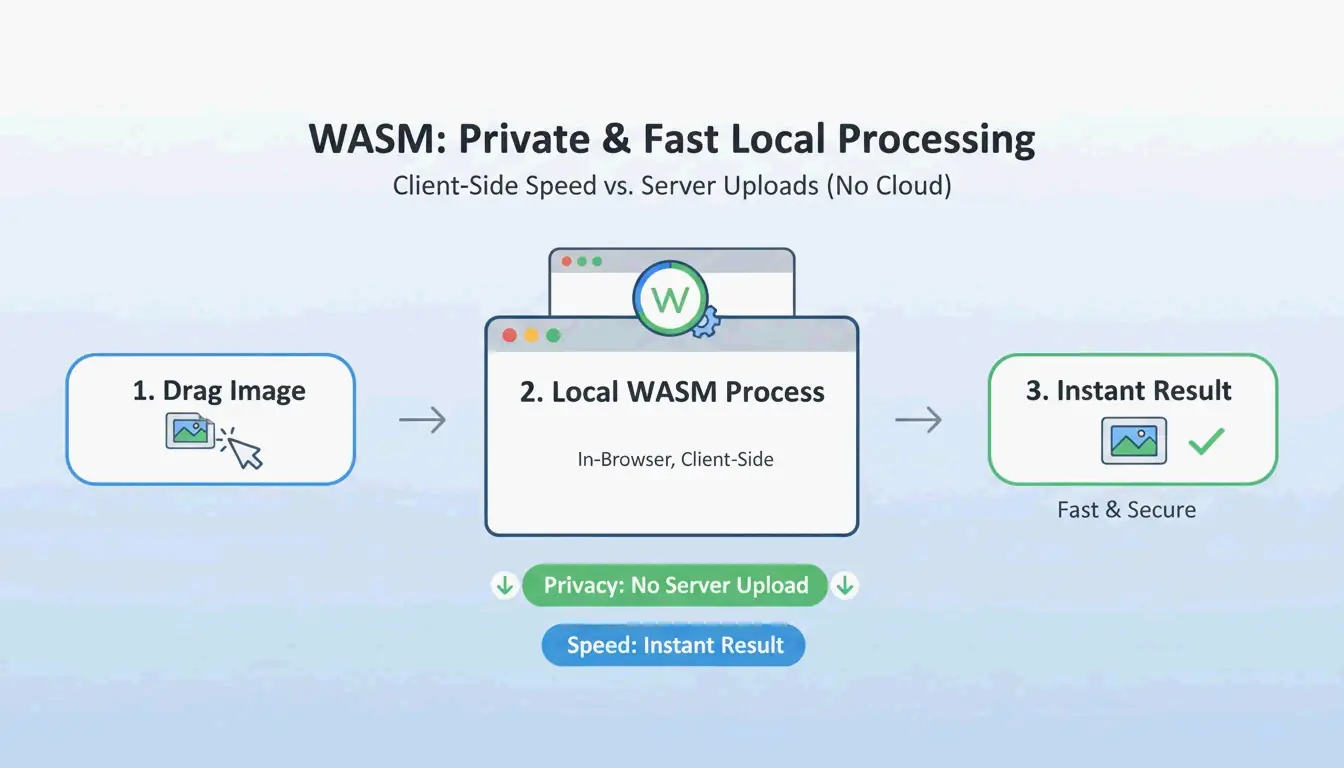
    To compress PNG files without losing quality, use lossless DEFLATE optimization (bit-identical output) or 8-bit quantization (70–85% smaller, visually identical). Modern WASM-based tools process everything locally in your browser — no upload, no privacy risk, instant results.

    Compression Method Comparison

    Method Reduction Quality Best For
    Lossless DEFLATE 10–30% Bit-identical (SHA-256 verifiable) Archives, re-editable assets
    8-bit Quantization 70–85% Visually identical UI elements, logos, screenshots
    Metadata Stripping 50–200 KB per file No pixel change All PNGs (privacy + size)
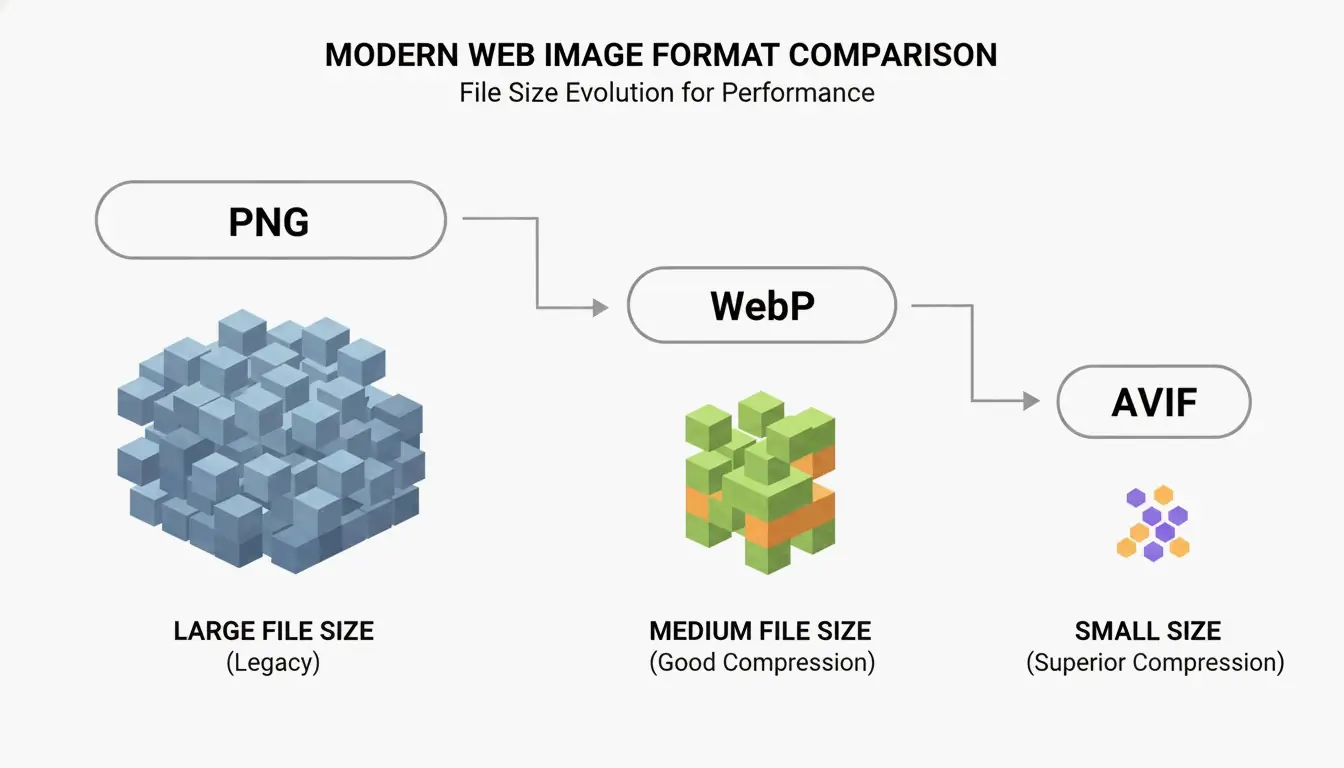
    WebP Conversion 25–35% smaller than lossless PNG Identical Web delivery
    AVIF Conversion 50%+ smaller than PNG Near-identical Modern browsers only

    Why PNG Compression Matters for SEO

    SammaPix reports that images are the Largest Contentful Paint (LCP) element on 70% of web pages. Slow-loading PNGs directly hurt Core Web Vitals and search rankings.

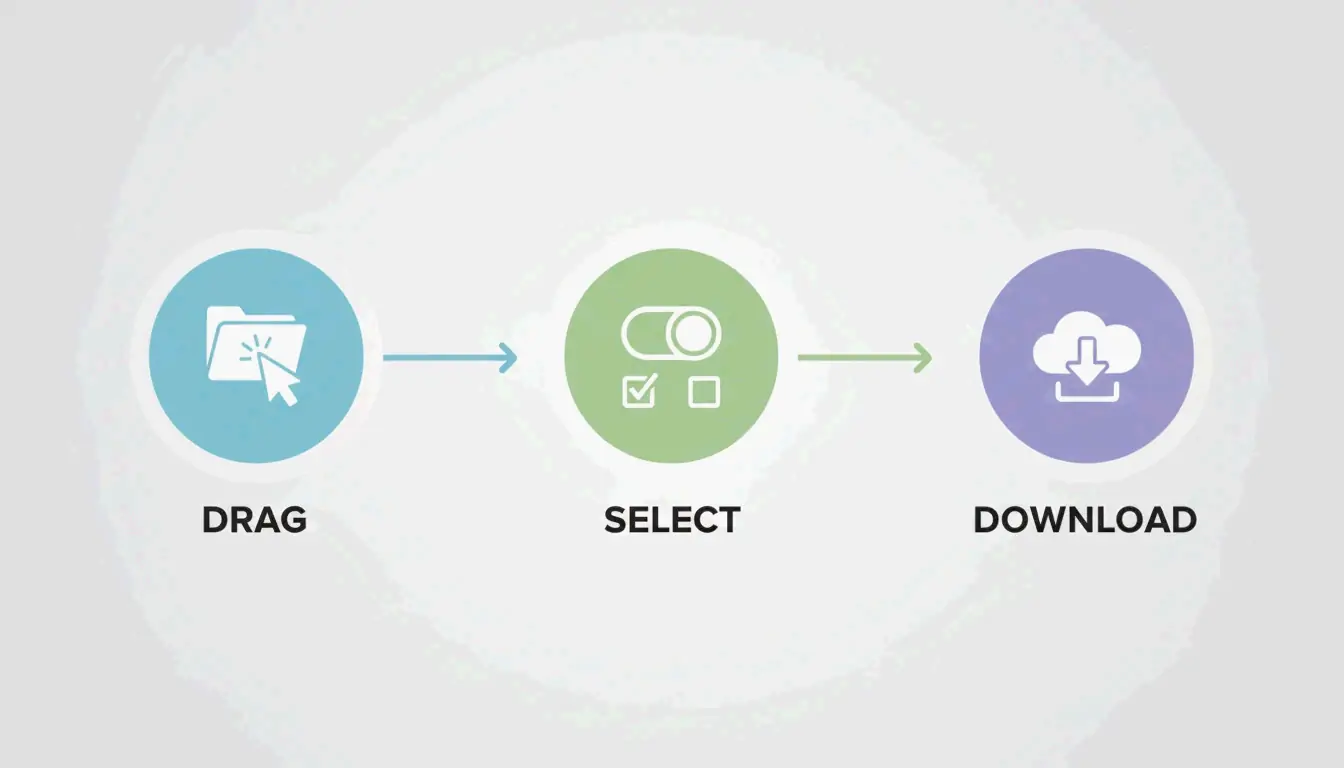
    Simple 3-step local processing workflow (Drag -> WASM Process -> Download)

    Method 1: Lossless DEFLATE Optimization

    Lossless compression repacks pixel data using the DEFLATE algorithm — no pixels change. As Let Compress describes it: “tidying up a suitcase without throwing anything away.”

    When to use: Professional archives, images you plan to re-edit, legal documents requiring bit-exact preservation.

    Verify with SHA-256

    To confirm a lossless tool truly preserves pixels, compare the SHA-256 hash of raw pixel data between original and compressed files. Use hash.ikit.app to run this check privately in your browser.

    Method 2: 8-Bit Quantization (70–85% Reduction)

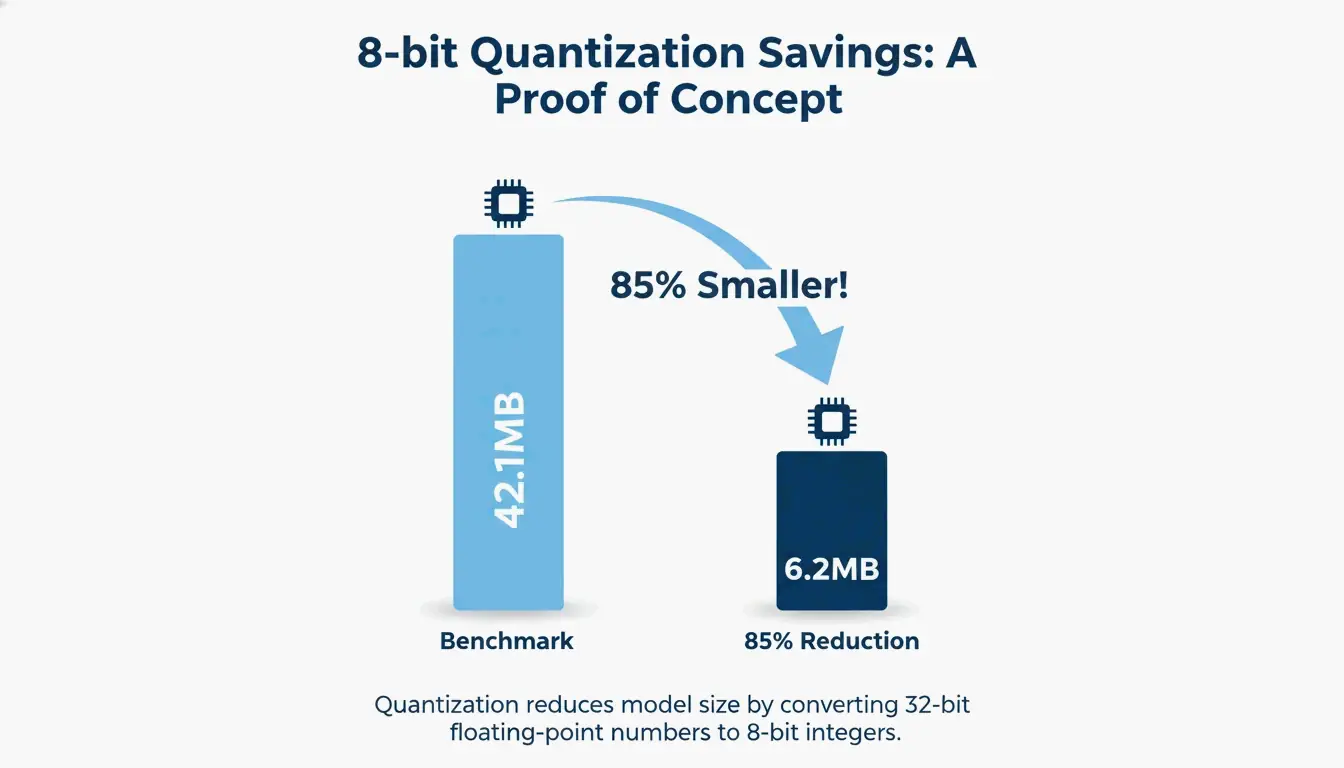
    PNG-24 holds millions of colors, but most UI designs and logos use fewer than 256 unique shades. Converting to an 8-bit indexed palette slashes file size with no visible difference at 1:1 zoom.

    iKit benchmark: a batch of UI screenshots reduced from 42.1 MB to 6.2 MB — an 85% reduction — while looking identical.

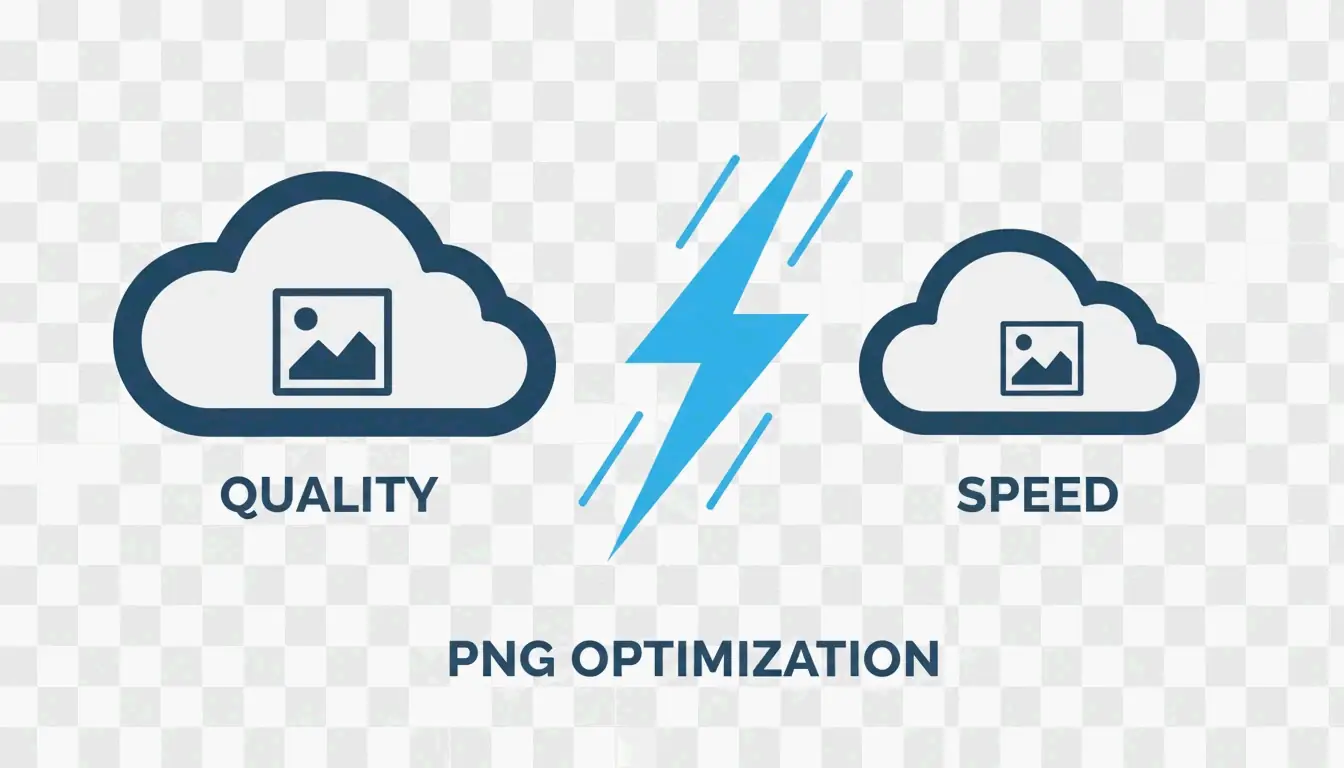
    A simple 1:1 comparison showing massive file size reduction with identical visual quality

    When to use: Website UI assets, logos, icons, screenshots — anything that doesn’t need millions of colors.

    Metadata Stripping: Free Size Reduction

    Design apps embed ICC color profiles, GPS data, timestamps, and creation metadata inside PNG files. iKit notes that stripping this data saves 50–200 KB per file with zero visual impact.

    Metadata Type Typical Size Privacy Risk
    ICC Color Profile 2–50 KB Low
    EXIF / GPS Data 0.5–5 KB High — exposes location
    Creation Timestamp 0.2–1 KB Medium
    Software Generator Tag 0.1–0.5 KB Low
    Thumbnail 5–50 KB Low

    Stripping EXIF is also a privacy best practice — it prevents accidental location sharing from screenshots.

    CLI Tools for Batch Processing

    Tool Language Method Command
    oxipng Rust Lossless DEFLATE oxipng --opt 4 --strip all *.png
    pngquant C Lossy 8-bit quantization pngquant --quality=65-80 *.png

    CI/CD Integration

    
    - name: Optimize PNGs
      run: |
        npm install -g oxipng
        find ./src -name "*.png" -exec oxipng --opt 4 --strip all {} \;
    

    Industry benchmarks show pngquant consistently achieves 60–80% reduction on UI assets.

    When to Use WebP or AVIF Instead

    Even optimized PNGs can’t match next-gen formats for web delivery.

    Format vs PNG Lossless Transparency Browser Support (2026)
    WebP 25–35% smaller Yes 97%+
    AVIF 50%+ smaller Yes 92%+

    A Google study confirmed WebP matches PNG’s lossless quality at significantly smaller sizes.

    Simple comparison of PNG vs WebP/AVIF file containers/sizes

    Best Strategy: Next-Gen Fallback

    Use the <picture> element with AVIF and WebP sources, falling back to PNG for older browsers. This pattern serves the smallest compatible format automatically.

    Serve AVIF/WebP to modern browsers, fallback to compressed PNG for older ones.

    PNG 3.0 (June 2025 Update)

    The PNG 3.0 specification added HDR image support and elevated Animated PNG (APNG) to a formal W3C Recommendation. For 2026 workflows, PNG 3.0 handles high-contrast visuals better while preserving the transparency features essential for UI design.

    Conclusion

    For maximum PNG compression: use 8-bit quantization for UI assets (70–85% smaller), lossless DEFLATE for archives, and strip metadata on all files. For web delivery, convert to WebP or AVIF with a <picture> fallback. Always verify lossless output with SHA-256 hash comparison.

    FAQ

    Does compressing a PNG make the image blurry?

    No. Lossless compression is bit-identical. 8-bit quantization uses a 256-color palette that remains perceptually identical for UI elements and logos. Blurriness only occurs with low-quality general lossy algorithms not designed for sharp edges.

    Why is my compressed PNG still too large?

    Three causes: (1) Oversized pixel dimensions — resize to actual display width (e.g., 1920px). (2) Complex noise/gradients that DEFLATE can’t simplify. (3) Heavy embedded metadata — enable “Strip Metadata” in your tool settings.

    Is it safe to use online PNG compressors?

    Only if the tool uses WebAssembly (WASM) for local browser processing — files never leave your device. Avoid upload-based compressors for sensitive documents, as files are processed on remote servers.

    What is the difference between oxipng and pngquant?

    oxipng performs lossless optimization — tests every filter combination for the smallest bit-identical file. pngquant performs lossy 8-bit quantization — converts 32-bit RGBA to 8-bit palette for 60–80% reduction. Use oxipng for archives, pngquant for web assets.

  • How to Reduce File Size: The Ultimate Guide to Shrinking PDFs, Images, and Videos (2026)

    How to Reduce File Size: The Ultimate Guide to Shrinking PDFs, Images, and Videos (2026)

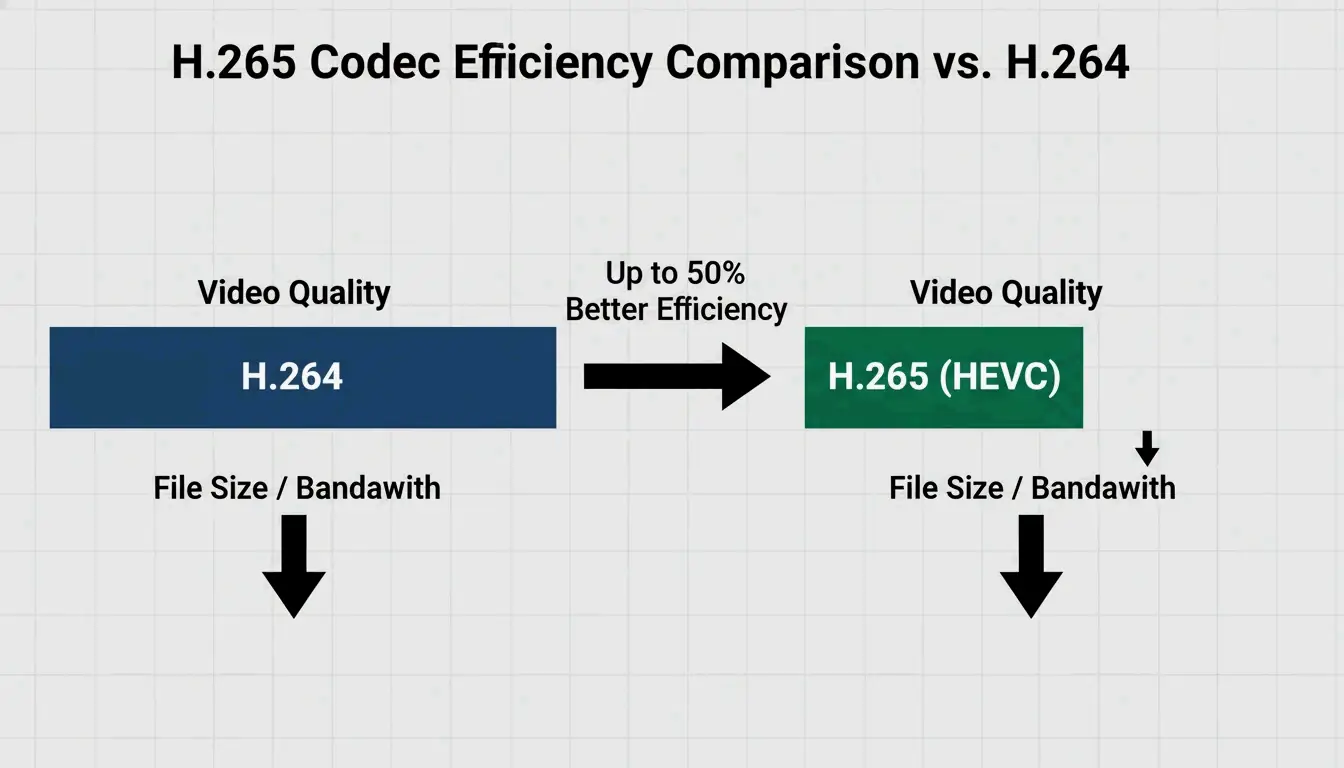
    To reduce file size in 2026, apply the right strategy per file type: PDFs — downsample images to 150 DPI and enable font subsetting (up to 89% reduction). Images — export as WebP or JPEG at 80% quality (40–60% smaller). Videos — re-encode with H.265 at 2–5 Mbps (50% smaller than H.264).

    File Type Quick Reference

    File Type Best Tool Typical Reduction Key Setting
    PDF Adobe Acrobat Pro / Ghostscript 60–89% Downsample to 150 DPI
    Image WebP / JPEG 80% 40–60% Quality 80, resize to display dimensions
    Video Handbrake (H.265) ~50% vs H.264 Bitrate 2–5 Mbps (1080p)
    Multi-file 7-Zip archive Varies by content ZIP or 7z container

    Lossy vs. Lossless: When to Use Each

    Type How It Works Best For Quality Loss
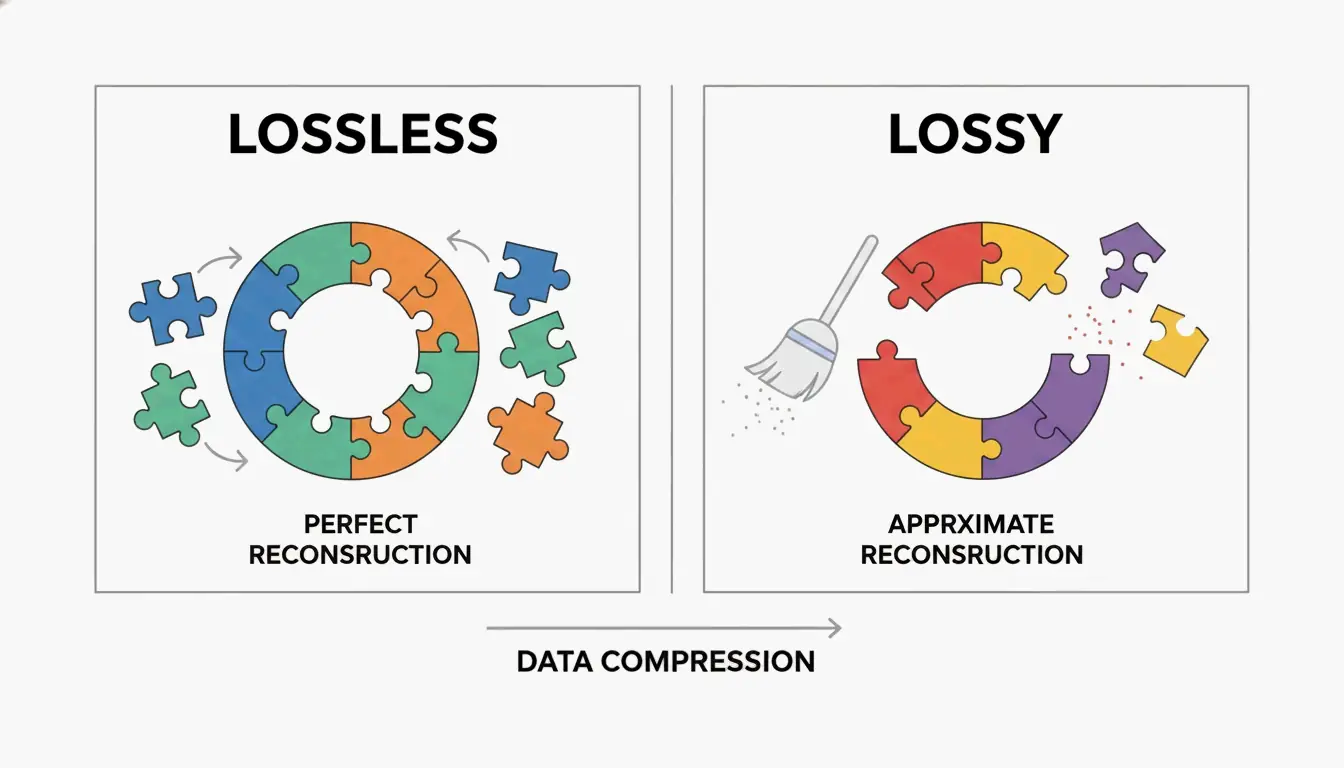
    Lossless Removes redundant data patterns Text documents, archival photos, PNG None — pixels identical
    Lossy Discards data humans can’t perceive Web images, streaming video, email attachments Minimal at proper settings

    As SmartPDFSuite explains, failing to resize images to their final display dimensions before embedding creates “25× data bloat” — the single most common file size mistake.

    A simple side-by-side comparison of Lossless (identical) vs. Lossy (optimized) data structures.

    PDF Compression: Adobe Acrobat Pro and Alternatives

    PDFs are often the bulkiest office files because they bundle high-res images, fonts, and layers into one container. Smallppt reports that images typically make up 70% of a PDF’s total size.

    Adobe Acrobat Pro: PDF Optimizer

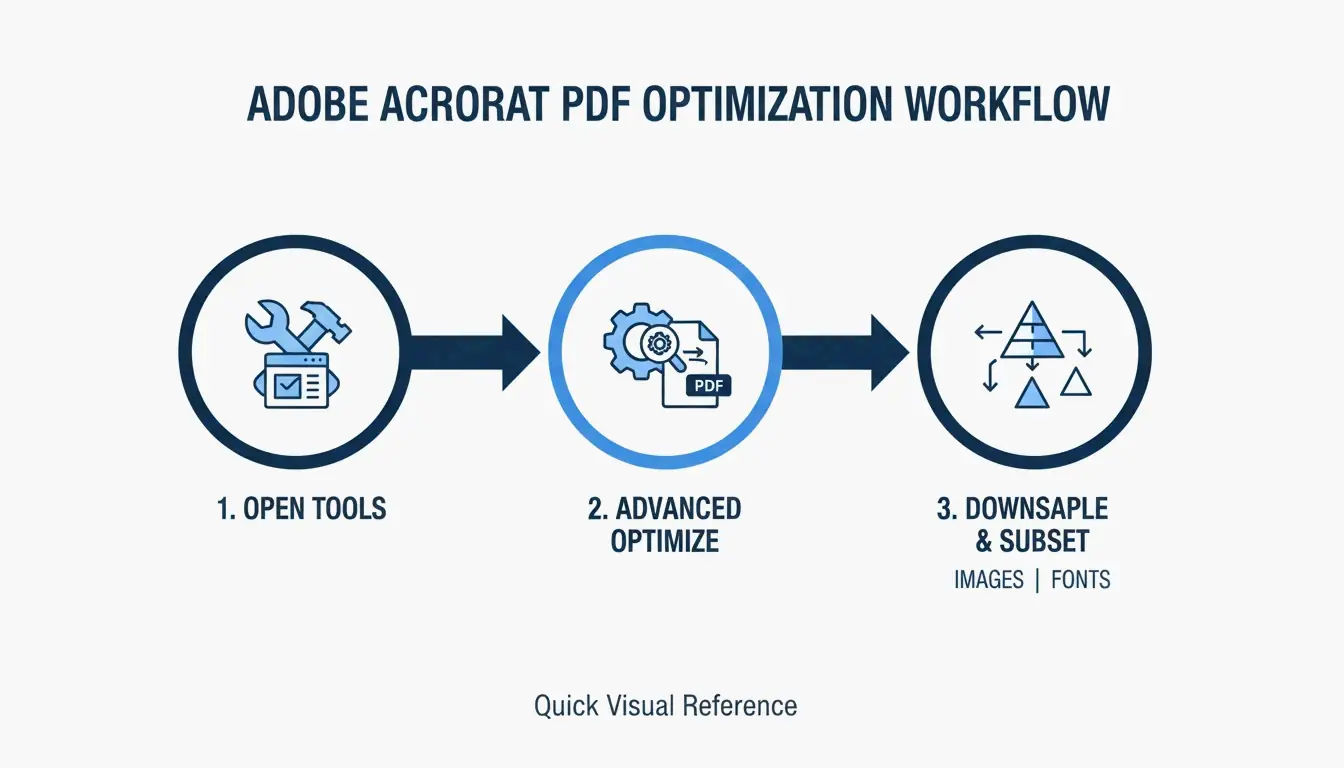
    1. Open PDF → All Tools > Compress a PDF
    2. Select Advanced Optimization
    3. Downsample images to 150 DPI (web) or 300 DPI (print)
    4. Enable Font Subsetting — embeds only used characters, cutting font weight by 80–90% per SmartPDFSuite

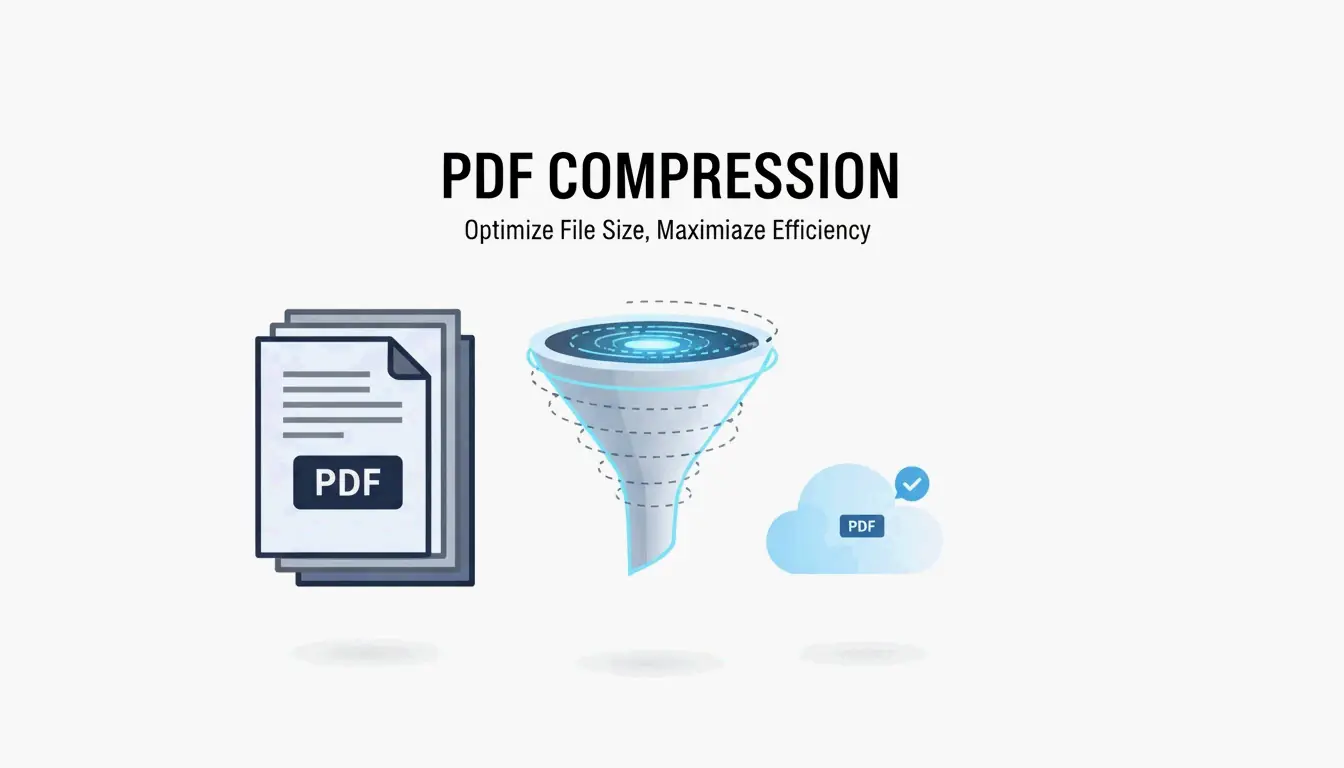
    A 3-step visualization of the PDF optimization workflow.

    Alternative PDF Tools

    Tool Reduction Best For
    Cisdem PDF Compressor Up to 89% Image-heavy PDFs on Mac
    pdfFiller Low/Medium/High presets Team batch processing
    Ghostscript (CLI) Up to 94.5% Automated large-volume jobs
    Mac Preview Up to 86% Quick single-file jobs

    Why Is Your PDF Still Large?

    Hidden Culprit Fix
    Embedded full fonts (not subsetted) Enable font subsetting
    Hidden editing layers / CAD data Flatten the PDF
    Scanned images instead of text Run OCR, then delete raster background
    Print-only metadata Use “Optimize PDF” to strip

    Image Optimization: JPEG, WebP, and AVIF

    The 80% Quality Rule

    SmartPDFSuite found that JPEG at 80% quality is visually indistinguishable from 100% but 40–60% smaller.

    Format Selection Guide

    Format Best For Transparency Size vs JPEG
    JPEG Photography No Baseline
    PNG Graphics, screenshots Yes 2–3× larger
    WebP Web standard (2026) Yes 30% smaller
    AVIF Maximum compression Yes 50% smaller
    SVG Icons, logos Yes Tiny (text-based)

    DPI Settings

    Target DPI Why
    Web / Screen 72–150 DPI IRCC Canada recommends 96–150 DPI for digital submissions
    Standard Print 150–200 DPI Balance of quality and size
    Professional Print 300 DPI Baseline for sharp physical output

    Video Compression: Codecs and Handbrake

    Video compression hinges on two factors: codec (the compression algorithm) and bitrate (data per second).

    H.264 vs H.265 (HEVC)

    Codec Quality at Same Size Size at Same Quality Compatibility
    H.264 Baseline Baseline Universal
    H.265 Better ~50% smaller 95%+ (2026)

    Bitrate Targets

    Use Case Resolution Bitrate
    Web / Social Media 1080p 2–5 Mbps
    Archival / High Def 1080p 10–20 Mbps
    4K Content 2160p 20–40 Mbps

    A comparison of H.264 vs H.265 showing the efficiency gain (same quality, smaller size).

    Handbrake: Batch Video Compression

    1. Open Handbrake → click “Open Source” to select files or folder
    2. Check Web Optimized
    3. Select H.265 (x265) video codec
    4. Set target bitrate (2–5 Mbps for web)
    5. Click Add to QueueStart Encode

    Processes entire folders automatically.

    Built-in OS Shortcuts

    macOS Preview (Quartz Filter)

    1. Open PDF in Preview
    2. File → Export
    3. Select “Reduce File Size” from Quartz Filter dropdown
    4. Save

    Cisdem notes this achieves up to 86% reduction, but may over-compress or paradoxically increase size on already-optimized files.

    Windows Print-to-PDF

    “Printing” a PDF to a new file strips editing history and hidden objects, often producing a leaner version with zero tool installation.

    Conclusion

    Reduce file size by targeting the dominant bloat: images in PDFs (downsample + font subset), format choice for photos (WebP at 80% quality), and codec selection for video (H.265 at 2–5 Mbps). Always keep a high-res backup before applying lossy compression — once pixels are discarded, they can’t be recovered.

    FAQ

    How can I compress a PDF on my phone without an app?

    Use browser-based tools like Smallpdf, Adobe Online, or pdfFiller. On iOS, use the “Print” trick: open PDF → Share → Print → pinch to zoom on the preview — this creates a flattened, smaller copy you can save.

    Does reducing file size always lose quality?

    No. Lossless compression (PNG optimization, ZIP) removes redundant data with zero quality change. Lossy compression (JPEG 80%, H.265) discards data imperceptible to human eyes, achieving large reductions without visible degradation.

    Why is my PDF still large after compression?

    Check for un-subsetted fonts (embeds entire font libraries), hidden layers from editing software, scanned images that should be OCR text, or print-only metadata. Use “Advanced Optimization” in Acrobat Pro to strip these elements.

    What is the best video codec for smaller file size?

    H.265 (HEVC) delivers the same quality as H.264 at roughly half the file size. Use Handbrake with the H.265 (x265) codec and target 2–5 Mbps for 1080p web content.

  • Resize Image: Quick Photo Size Guide for Web & Social Media (2026)

    Resize Image: Quick Photo Size Guide for Web & Social Media (2026)

    To resize images without quality loss, lock the aspect ratio, set the correct pixel dimensions for your target platform (e.g., 1080×1350px for Instagram), and export as WebP for web or JPEG at 80% quality for photos. Proper resizing can shrink a 4MB photo to 200KB — an 80% reduction — with no visible difference on screen.

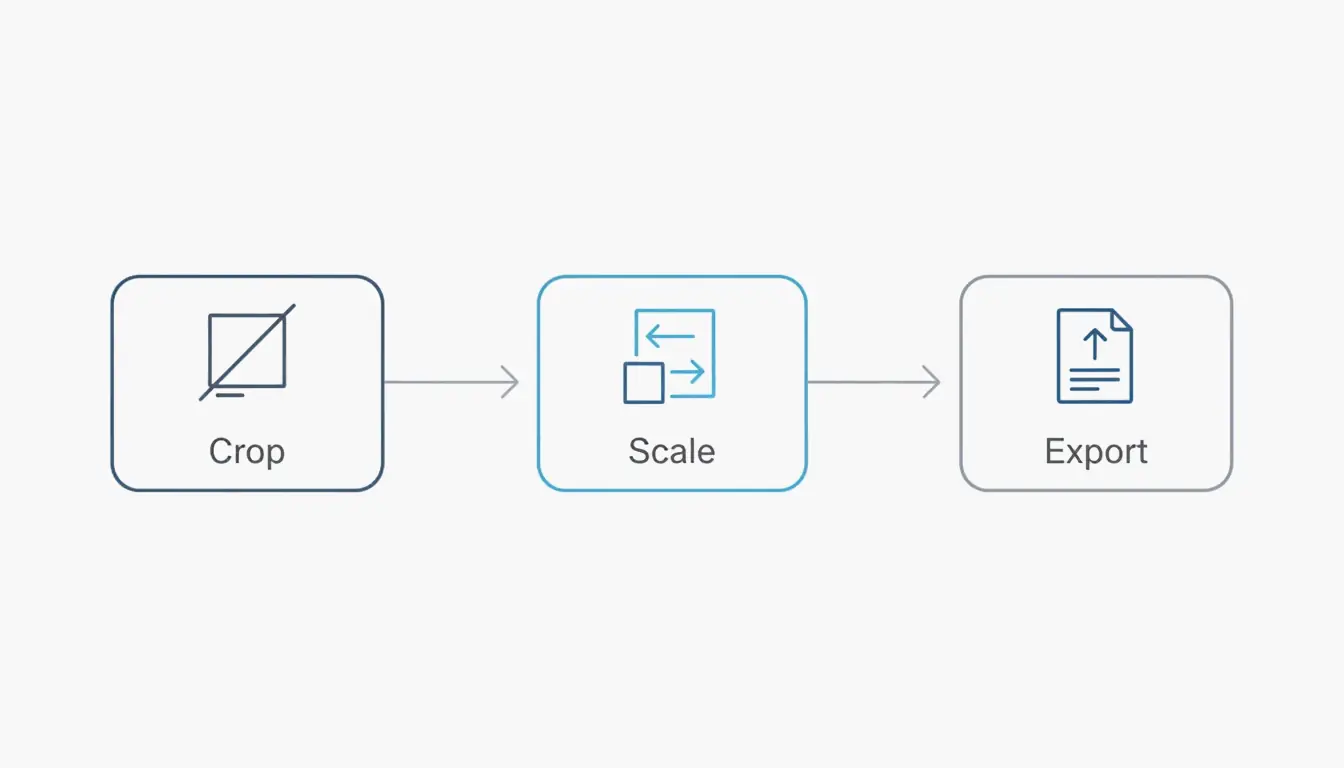
    The 3-Step Professional Workflow

    Step Action Why
    1. Crop Trim to target aspect ratio Prevents stretching later
    2. Scale Resize to exact pixel dimensions Matches platform requirements
    3. Export Save in optimal format Minimizes file size

    The 3-step professional workflow: Crop > Scale > Export.

    O’Brien Media reports that proper resizing achieves 80% file size reduction — turning a 4MB photo into a lean 200KB file.

    2026 Standard Pixel Dimensions

    Platform Dimensions Aspect Ratio Notes
    Instagram Feed 1080 × 1350 px 4:5 Portrait Maximum screen real estate in feeds
    Instagram Square 1080 × 1080 px 1:1 Classic format
    TikTok / Reels 1080 × 1920 px 9:16 Vertical full-screen
    LinkedIn Profile 400 × 400 px 1:1 Headshot
    YouTube Thumbnail 1280 × 720 px 16:9 Click-through driver
    Web Hero Banner 1920 × 1080 px 16:9 Full-width desktop
    Blog Image 1200 px wide varies Sweet spot for performance
    Email Header 600 px wide varies Email client safe width

    Picssizer data shows the 4:5 Portrait (1080×1350) format drives the most engagement because it occupies maximum screen space in mobile feeds.

    The Safe-Zone Strategy for Vertical Content

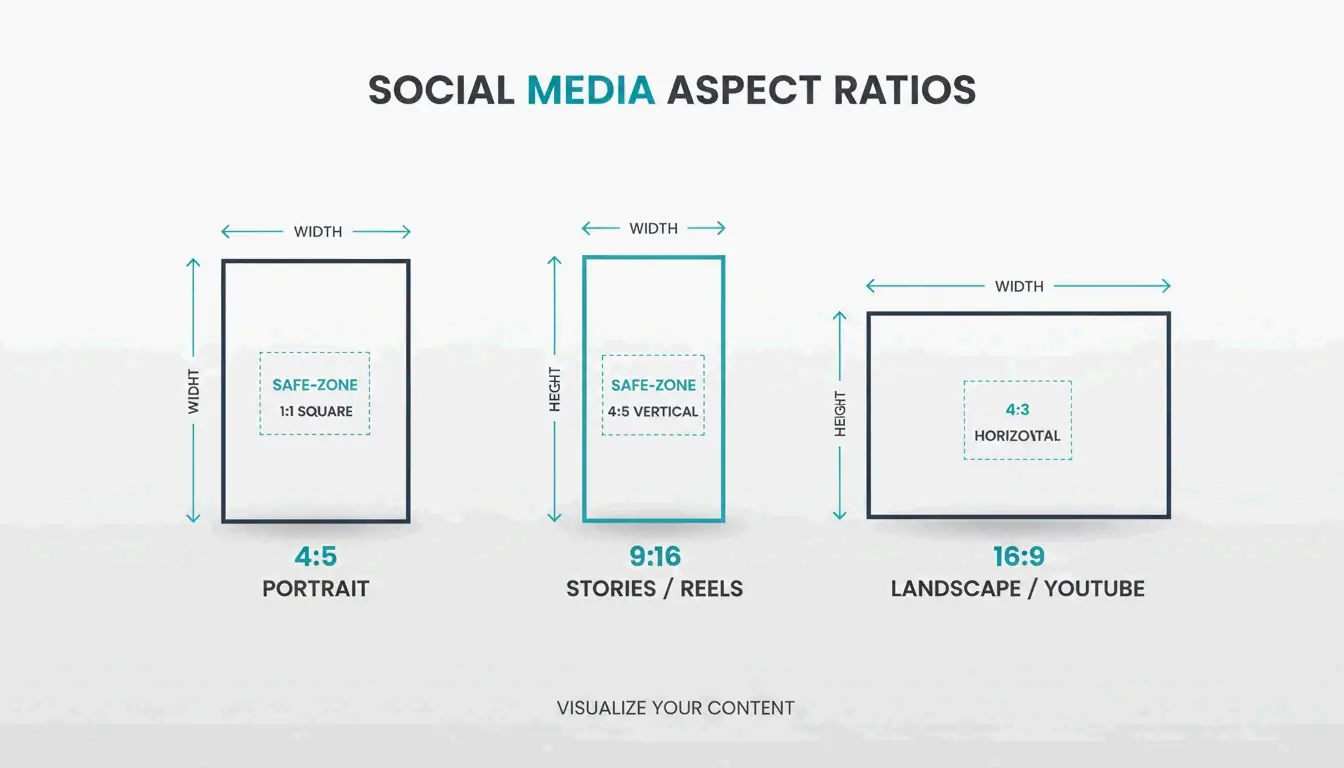
    For Reels and Stories (1080×1920), keep text and faces in the center 1080×1420 px area. The edges get covered by UI buttons, captions, and profile icons.

    A simple visual comparison of 4:5 Portrait vs 9:16 Vertical vs 16:9 Landscape.

    Format Comparison: JPEG vs PNG vs WebP vs AVIF

    Format Best For Transparency Typical Size vs JPEG Browser Support
    JPEG Photography No Baseline Universal
    PNG Logos, graphics Yes 2–3× larger than JPEG Universal
    WebP Web photos + graphics Yes 30% smaller than JPEG 97%+ (2026)
    AVIF Maximum compression Yes 50% smaller than JPEG 92%+ (2026)

    Recommended Export Settings

    Use Case Format Quality Dimensions
    Blog photos WebP or JPEG 80% 1200px wide
    Instagram JPEG 85% 1080×1350 px
    Logo / icon PNG or WebP Lossless Exact size needed
    Email attachment JPEG 70% 600–800px wide

    A case study found resizing a 5MB photo to 400KB (10:1 reduction) eliminates “message too large” email errors entirely.

    DPI: Web vs Print

    Target DPI Why
    Web / Screen 72 DPI Screens display at fixed resolution; higher DPI only inflates file size
    Print 300 DPI Required for sharp physical output

    Never use 300 DPI for web images — it quadruples file size with zero visual improvement on screen.

    Batch Resize Tools

    Processing images one by one is inefficient. Batch tools handle 100+ images in seconds.

    Tool Platform Method
    Adobe Express Browser Drag-and-drop, preset sizes
    Photo & Picture Resizer Android Quick Actions before sharing
    iOS Shortcuts iPhone Custom “Resize” automation to set width
    Quick Photo Resizer Desktop Folder drag-and-drop

    iOS Shortcut for Instant Resize

    In iOS 26, create a Shortcut: Photos → “Resize Image” → set width to 1080px → Save. Select photos from gallery and resize instantly without any app.

    Interpolation: Why Downscaling Looks Good but Upscaling Doesn’t

    Downscaling uses algorithms like Bicubic Sharper to cleanly remove pixels while recalculating remaining data — edges stay crisp. Upscaling forces software to invent new pixels, causing blurriness. Only AI-based generative upscalers can produce acceptable results when enlarging.

    Direction Quality Impact Recommendation
    Downscale Lossless appearance Safe at any ratio
    Upscale (standard) Pixelation, blur Avoid
    Upscale (AI) Acceptable with AI tools Use as last resort

    Conclusion

    Resize images to match your target platform’s exact pixel dimensions — 1080×1350 for Instagram, 1200px wide for blog images, 1920×1080 for hero banners. Always lock aspect ratio, export as WebP (or JPEG at 80%), and use batch tools for efficiency. Any image over 2MB on your website should be resized immediately for SEO and user experience.

    FAQ

    Why do my images look blurry after uploading to Instagram?

    Instagram compresses any image wider than 1080px. Resize to exactly 1080px wide before uploading, use 4:5 or 1:1 ratio to avoid cropping, and enable “High-quality uploads” in Instagram settings.

    What is the difference between resizing and cropping?

    Resizing changes total pixel count while keeping all content. Cropping removes outer edges to change composition or ratio. Best practice: crop to the correct ratio first, then resize to target dimensions.

    Can I enlarge an image without losing quality?

    Standard upscaling causes pixelation. In 2026, AI generative upscalers can recreate missing details, but the best practice is always to start from the highest-resolution source file and downsize.

    How do I resize photos on iPhone without a third-party app?

    Use the Shortcuts app to create a resize action, or email the photo to yourself — iOS prompts you to choose Small, Medium, or Large, effectively resizing the file.

  • SVG Compression Principle: How Vector Images Shrink Smartly (2026)

    SVG Compression Principle: How Vector Images Shrink Smartly (2026)

    SVG compression works because SVGs are text files (XML), not pixel grids. The principle is simple: strip redundant XML metadata, simplify path data precision, then apply server-level Brotli/Gzip encoding. Combined, these steps achieve 70–93% total size reduction with zero visual quality loss.

    How SVG Compression Works: 3 Layers

    Layer What Happens Typical Reduction
    1. Metadata removal Strip editor artifacts, comments, hidden layers 40–80%
    2. Path simplification Reduce coordinate precision, convert to relative deltas 10–30% additional
    3. Transfer encoding Brotli/Gzip compresses the text during delivery 15–20% beyond Gzip

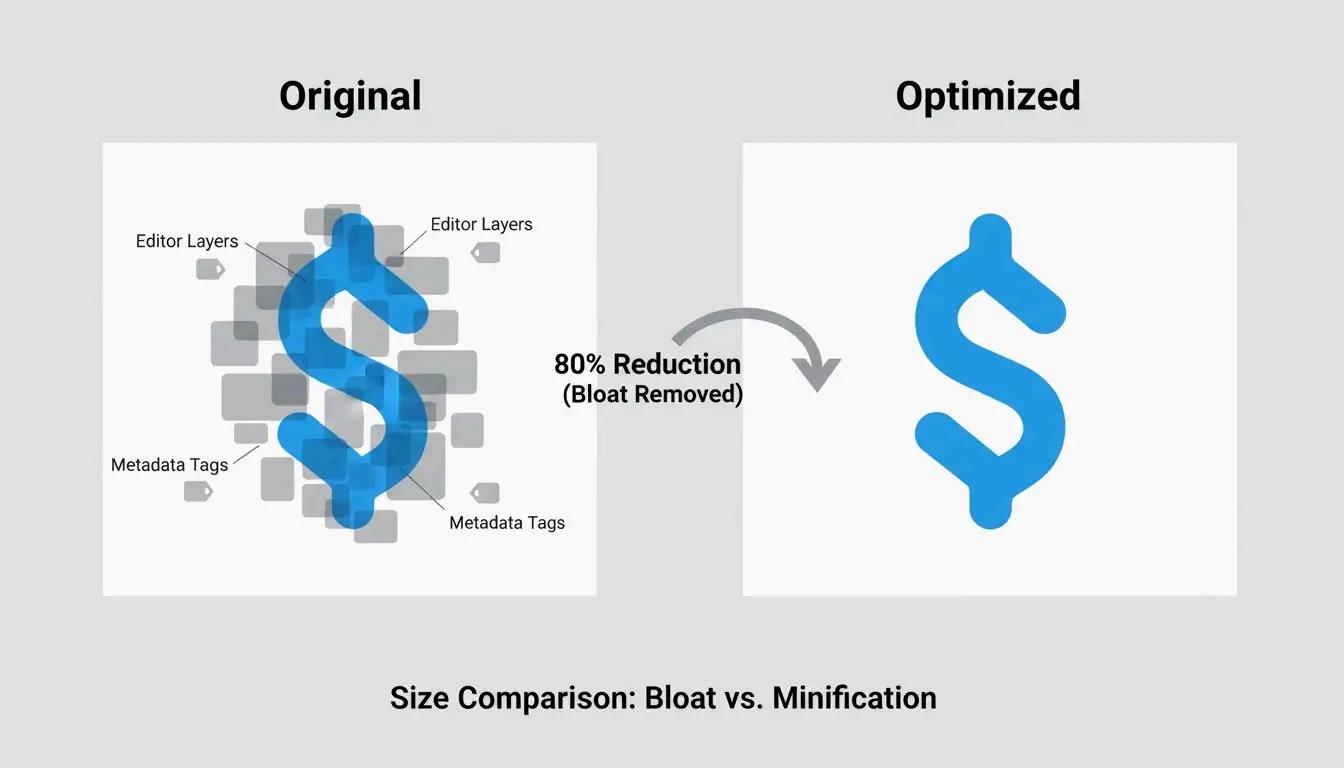
    According to DEV Community, a typical icon exported from Adobe Illustrator starts at 45 KB and drops to 8 KB after optimization — an 82% reduction.

    A simple comparison showing a 'Bloated SVG' (many layers/metadata) vs. a 'Clean SVG' (only core paths).

    Layer 1: Remove XML Metadata Bloat

    Design tools (Illustrator, Figma, Inkscape) embed proprietary metadata so designers can re-edit layers. This includes layer names, generator comments, workspace settings — all dead weight on the web.

    ToolPix highlights that cleaning these tags can cut file size by up to 80% while also reducing DOM footprint for faster browser rendering.

    What gets removed:

    Element Example Safe to Remove?
    Editor metadata <metadata> blocks Yes
    Generator comments <!-- Created with Illustrator --> Yes
    Hidden layers display="none" groups Yes
    Empty definitions Unused <defs> entries Yes
    Element IDs (unused) id="Layer_x0020_1" Only if not referenced by CSS/JS

    Layer 2: Simplify Path Data (the d Attribute)

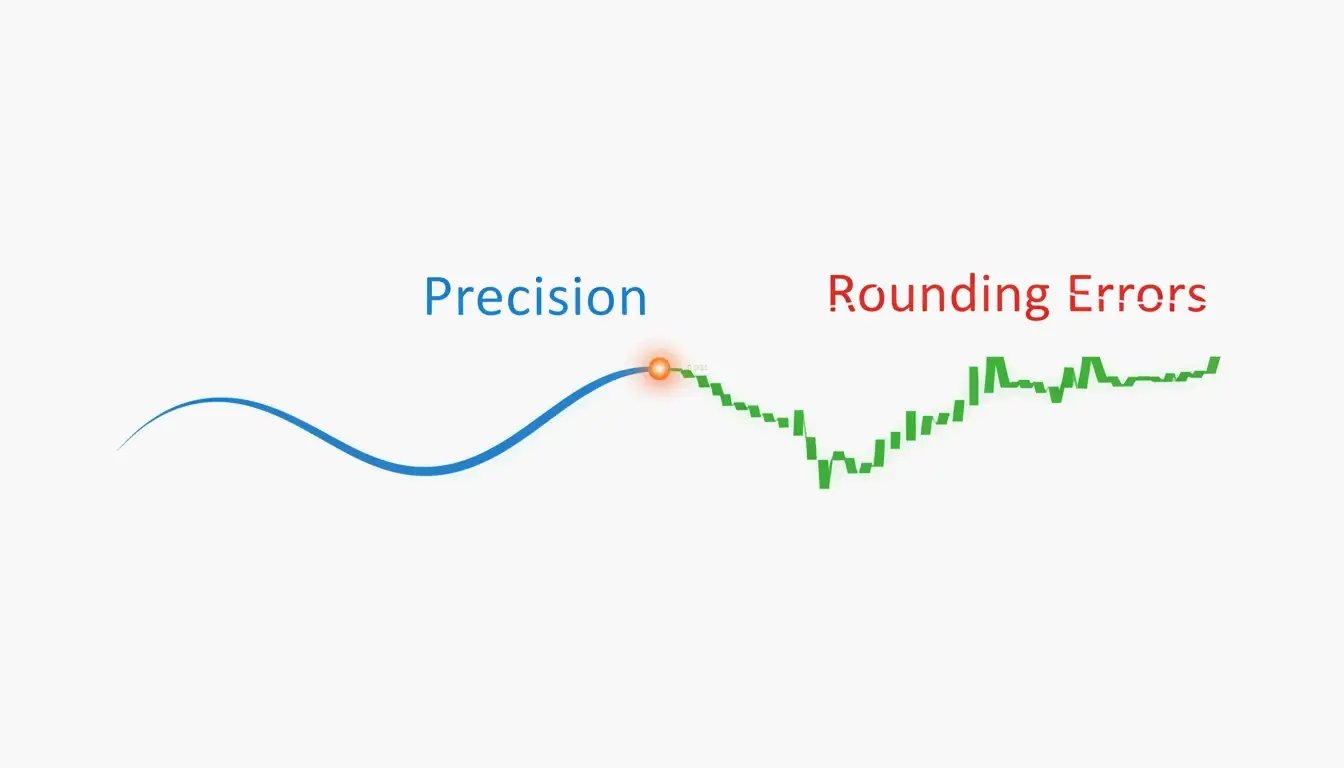
    The most effective optimization targets the path d attribute — the coordinate string defining shapes. These coordinates often carry 8 decimal places (e.g., 12.003906). Rounding to 2–3 decimals produces no visible change even on Retina displays but removes significant text.

    floatPrecision Settings by Use Case

    floatPrecision Best For Visible Impact
    1 Rarely recommended Gaps or jagged edges on curves
    2 Icons, logos, simple shapes None on standard screens
    3 Complex illustrations Safe for all displays
    4+ Technical/architectural drawings Preserves every decimal

    According to DEV Community, the two key techniques are rounding coordinates and converting absolute positions to relative deltas (shorter text).

    A visual metaphor of 'Precision vs. Quality' showing a smooth curve becoming jagged when decimals are removed.

    SVGO: The Standard Optimization Tool

    SVGO (SVG Optimizer) v3.3.2 is the industry standard for applying the SVG compression principle. It runs on Node.js v22+ and powers nearly every modern optimization workflow.

    Key SVGO Settings

    Setting Recommended Value Why
    multipass true Runs repeatedly until no more bytes to shave
    floatPrecision 2 (icons) / 3 (illustrations) Balance of size vs. quality
    removeViewBox false Preserves responsive scaling
    cleanupIDs true Removes unused IDs (skip if CSS/JS references them)
    removeScriptElements true Security: strips XSS vectors

    A case study on a UI icon set achieved 93.3% total reduction using SVGO combined with Brotli.

    SVGO Quick Start

    
    npm install -g svgo
    
    # Optimize a single file
    svgo input.svg -o output.svg
    
    # Optimize entire directory
    svgo -f ./src/icons -o ./dist/icons
    

    For a visual interface, SVGOMG (web-based SVGO playground) lets you toggle plugins and preview changes in real time.

    Layer 3: Brotli and Gzip Transfer Encoding

    SVGO cleans the file itself, but the final size reduction happens at the server level. Because SVGs are text, standard compression algorithms work exceptionally well.

    Algorithm SVG Reduction Notes
    Gzip 50–80% of original Long-standing standard
    Brotli 15–20% smaller than Gzip 2026 web standard for image/svg+xml

    Wikipedia notes that Gzip alone can shrink SVG to 20–50% of original size. Brotli consistently beats it by an additional 15–20%.

    Nginx Configuration

    # Enable Brotli for SVG
    brotli on;
    brotli_types image/svg+xml;
    brotli_comp_level 6;
    
    # Fallback Gzip
    gzip on;
    gzip_types image/svg+xml;
    

    DEV Community reports: an icon set of 50 files totaling 450 KB drops to under 30 KB with SVGO + Brotli combined.

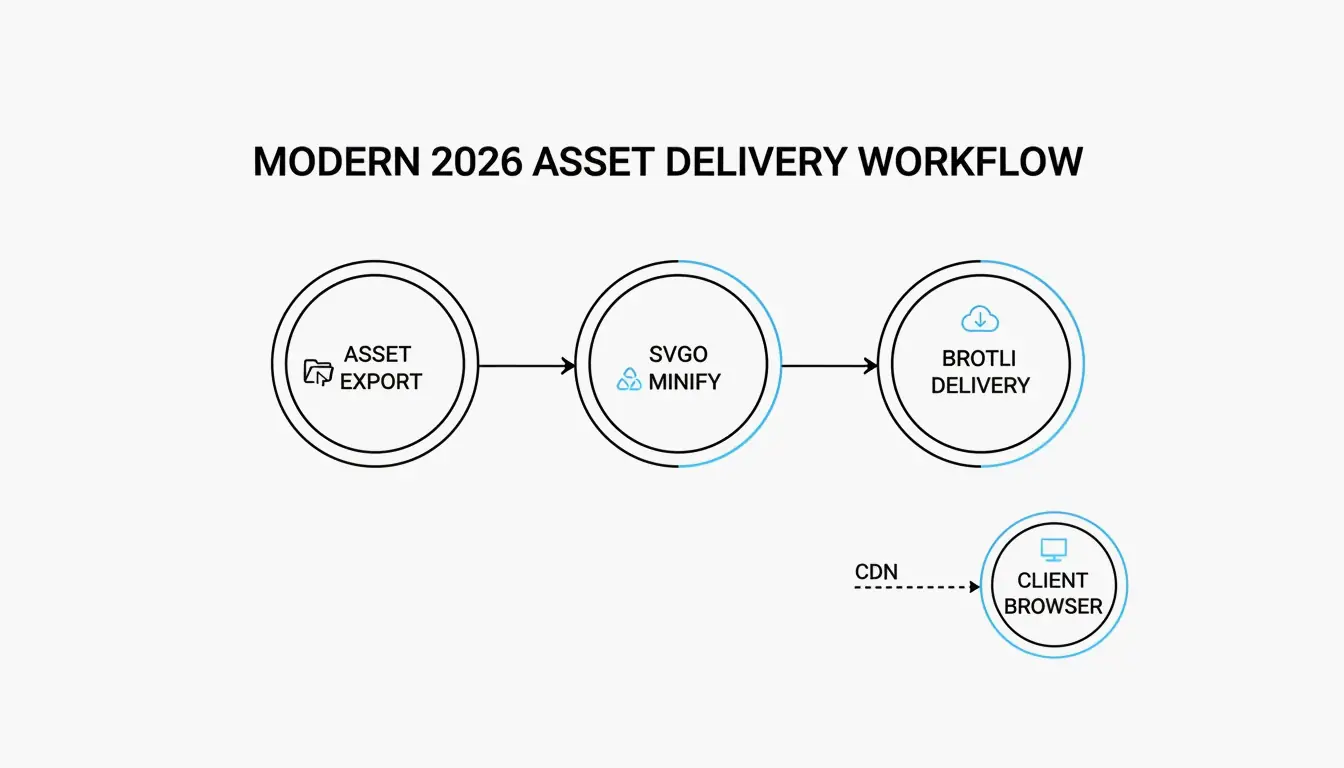
    The 2-step delivery process: Source SVG -> SVGO (Minify) -> Server (Brotli) -> Browser.

    Critical: Preserve the viewBox Attribute

    The viewBox attribute is the coordinate system that enables responsive scaling. If your optimizer strips it, the SVG defaults to fixed pixel dimensions and breaks your layout.

    Always set removeViewBox: false in SVGO. This is the single most important setting — it keeps your images scalable across all screen sizes.

    SVG Compression as a Security Layer

    SVGs are XML documents and can contain malicious <script> tags or foreignObject elements for XSS attacks. MDN Web Docs warns that SVGs can execute scripts when loaded directly in the browser.

    SVGO’s removeScriptElements plugin strips these vectors automatically. Optimization isn’t just about speed — it’s a sanitization step.

    Conclusion

    SVG compression is a two-part process: code minification (metadata + path simplification via SVGO) and server-side encoding (Brotli/Gzip). Start with SVGO v3.3.2 at floatPrecision: 2, keep viewBox intact, and enable Brotli on your server. This layered approach achieves 70–93% total reduction without visual quality loss.

    FAQ

    Does SVG compression reduce visual quality?

    No. Removing metadata and comments is fully lossless. Only reducing floatPrecision below 2 can cause visible rounding errors (jagged curves). Keep it at 2 or higher for all production assets.

    Why is my exported SVG larger than a PNG?

    Design tools embed proprietary XML data, thumbnails, and hidden layers. If your SVG also contains thousands of path nodes or embedded raster images, it can exceed an equivalent PNG. Run it through SVGO to strip the bloat.

    When should I avoid SVG path simplification?

    Skip heavy simplification for technical illustrations or architectural plans where every decimal matters. Also preserve element IDs if your SVG is manipulated by external CSS or JavaScript — removing them breaks code references.

    What does viewBox do in SVG compression?

    The viewBox attribute defines the SVG’s internal coordinate system for responsive scaling. Removing it locks the image to fixed pixel dimensions. Always set removeViewBox: false in your optimizer config.

  • How to Compress a PDF: 5 Free Ways to Reduce File Size on Mac/Windows (2026)

    How to Compress a PDF: 5 Free Ways to Reduce File Size on Mac/Windows (2026)

    To compress a PDF for free in 2026, Mac users can use the built-in Preview app’s Quartz Filter (up to 86% reduction), while Windows users can export from Microsoft Word with “Minimum Size” settings. For maximum compression, Ghostscript achieves up to 94.5% reduction via command line. Online tools like Smallpdf handle quick jobs in the browser.

    5 Free Methods Compared

    Method Platform Max Reduction Batch Privacy Best For
    1. Mac Preview macOS ~86% No Full (offline) Quick single-file jobs
    2. Microsoft Word Windows ~60% No Full (offline) Text-heavy reports
    3. Smallpdf Browser ~75% Limited Cloud (GPC/GDPR) Quick one-off jobs
    4. Ghostscript Mac/Win CLI ~94.5% Yes Full (offline) Large archives, batch
    5. 7-Zip Mac/Win Container only Yes Full (offline) Sending multiple PDFs

    Method 1: Mac Preview — Quartz Filter

    Cisdem reports up to 86.1% reduction on image-heavy PDFs using Preview’s built-in Quartz Filter.

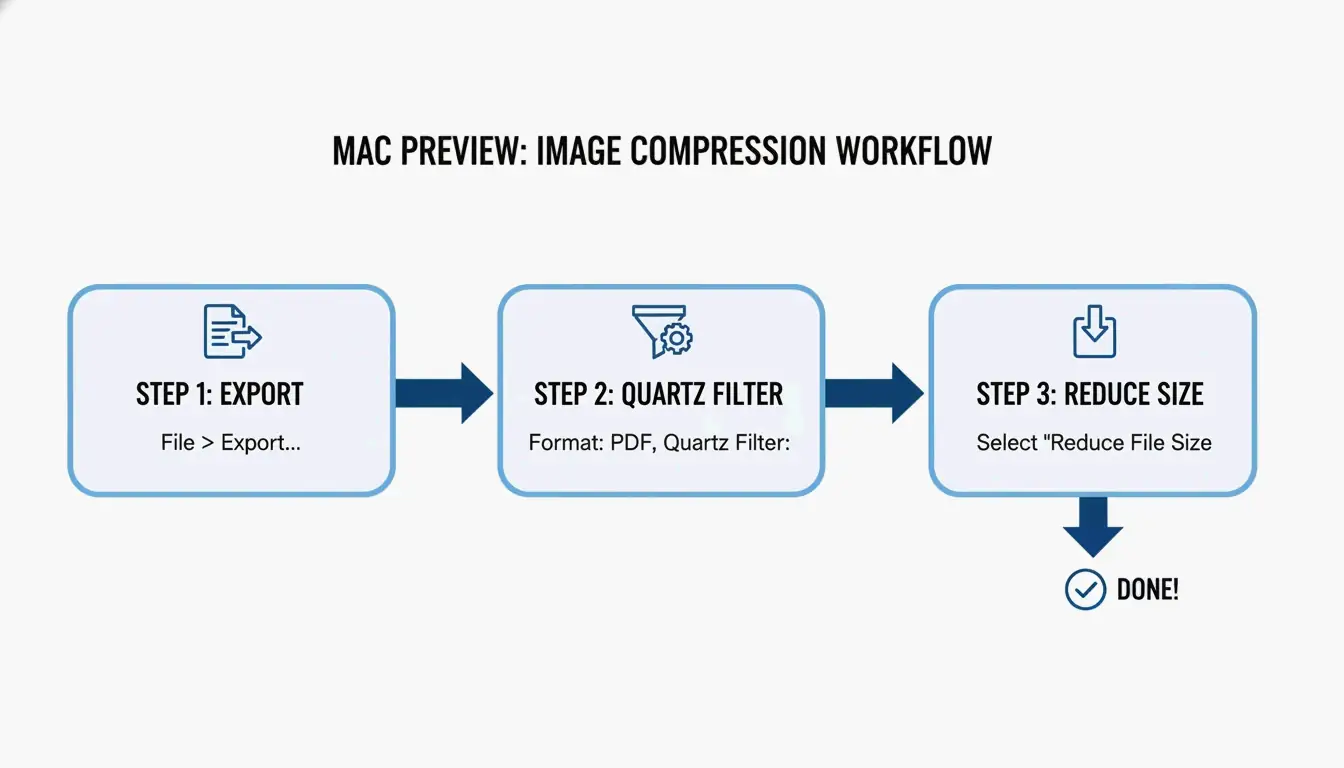
    1. Open PDF in Preview
    2. Go to File → Export
    3. In the Quartz Filter dropdown, select “Reduce File Size”
    4. Click Save

    Simple 3-step workflow for Mac Preview compression

    Pro tip: Ensure source images are in RGB format (not CMYK) before exporting — this strips unnecessary color data while keeping visuals crisp.

    Troubleshooting: When Preview Makes Files Larger

    Sometimes “Reduce File Size” actually increases the file. This happens when Preview re-encodes already-optimized images or struggles with complex fonts. Cisdem notes quality may still drop. Switch to Ghostscript or Smallpdf in these cases.

    Method 2: Microsoft Word — “Minimum Size” Export

    Best for text-heavy reports that need to fit email or web upload limits.

    1. Open the document in Word
    2. Go to File → Save As
    3. Select PDF as file type
    4. Under “Optimize for,” choose “Minimum size (online publishing)”
    5. Click Save

    Word prioritizes text clarity while aggressively shrinking images to web standards.

    Method 3: Smallpdf — Online Compression

    Browser-based, no installation required. Works with Google Drive and Dropbox.

    1. Upload your PDF to Smallpdf
    2. Choose compression — Basic (balanced) or Strong (maximum)
    3. Download the optimized file

    Privacy: Reputable platforms follow GPC and GDPR, deleting files within an hour. Look for SOC2 certification. For sensitive business data, JOPDF recommends offline tools.

    Method 4: Ghostscript — Maximum Compression (94.5%)

    The most powerful free option for large-scale compression. Cisdem achieved 94.5% reduction on a 60MB file.

    Install

    
    brew install ghostscript
    
    # Windows — download from ghostscript.com
    

    Commands

    # Medium quality (150 DPI) — best balance
    gs -sDEVICE=pdfwrite -dPDFSETTINGS=/ebook \
      -dCompatibilityLevel=1.4 -dNOPAUSE -dQUIET \
      -dBATCH -sOutputFile=output.pdf input.pdf
    
    # Screen quality (72 DPI) — maximum compression
    gs -sDEVICE=pdfwrite -dPDFSETTINGS=/screen \
      -dCompatibilityLevel=1.4 -dNOPAUSE -dQUIET \
      -dBATCH -sOutputFile=output.pdf input.pdf
    
    # Print quality (300 DPI) — for archives
    gs -sDEVICE=pdfwrite -dPDFSETTINGS=/printer \
      -dCompatibilityLevel=1.4 -dNOPAUSE -dQUIET \
      -dBATCH -sOutputFile=output.pdf input.pdf
    
    Setting DPI Typical Reduction Best For
    /screen 72 ~95% Strict portal limits (100KB)
    /ebook 150 ~90% General sharing, email
    /printer 300 ~50% High-quality archives

    Processes a 1,000-page document in ~10 seconds.

    DPI Guide for Quality

    Target DPI Use Case
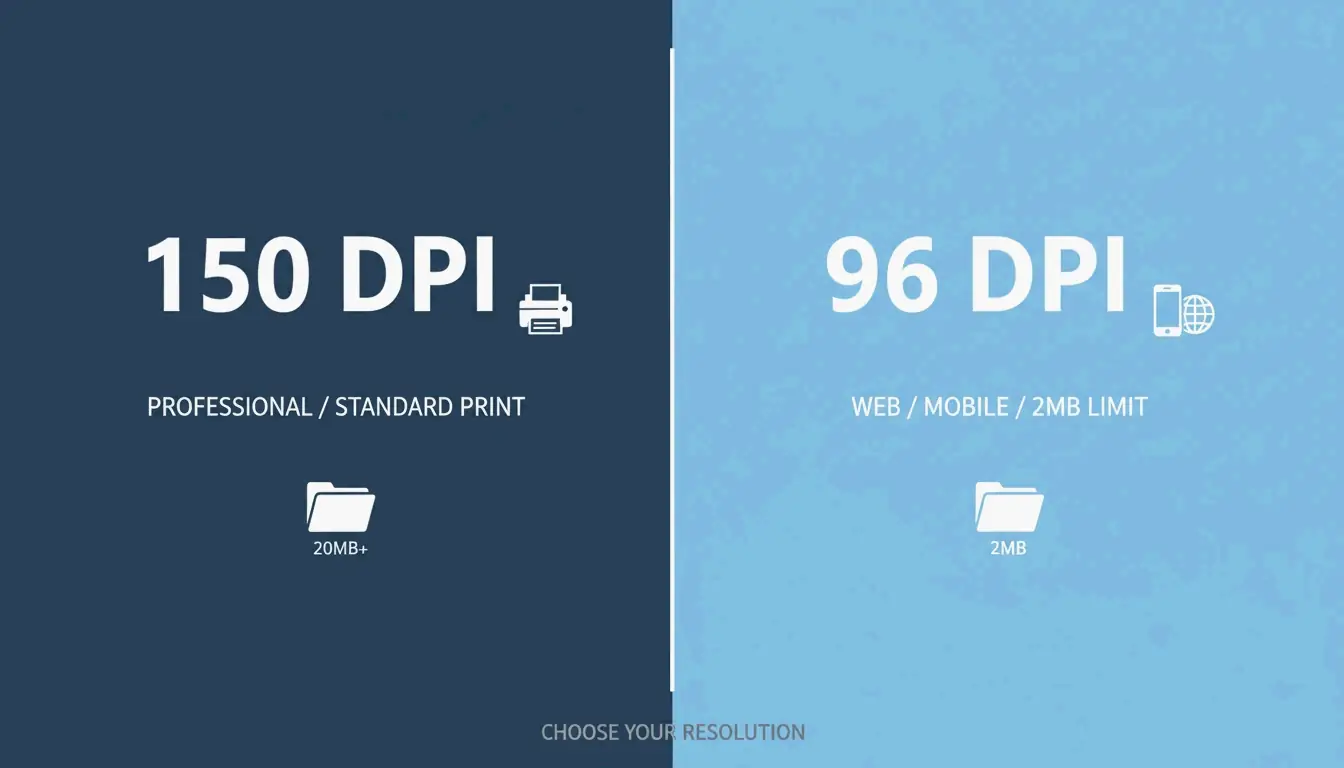
    96 DPI Mobile/web viewing Government portals, strict 2MB limits
    150 DPI Professional standard Email, web sharing, printing
    300 DPI High-quality print Legal documents, blueprints

    IRCC Canada recommends 96–150 DPI for digital submissions.

    Comparison of 150 DPI vs 96 DPI for file size and clarity

    Method 5: 7-Zip — Archive Multiple PDFs

    When you cannot shrink individual PDFs further, or need to send a folder of them:

    1. Select PDF files → Right-click → 7-Zip → Add to archive
    2. Choose .zip or .7z format
    3. Send the archive

    Many government portals prefer archives because they preserve original high-resolution documents while bypassing file count limits.

    Conclusion

    For quick single-file compression, use Mac Preview or Microsoft Word. For maximum reduction (94.5%), use Ghostscript with /ebook settings. For sensitive documents, stick to offline tools. For multiple files, use 7-Zip archives. Always target 150 DPI for professional quality or 96 DPI for strict upload limits.

    FAQ

    Why does Preview sometimes make PDFs larger?

    Preview may re-encode already-optimized images inefficiently or duplicate embedded fonts and metadata during export. Use Ghostscript or Smallpdf instead when this happens.

    How do I compress a PDF to exactly 100KB?

    Use Adobe Acrobat’s “PDF Optimizer” or JOPDF with adjustable DPI. Lower resolution to 72–96 DPI and strip all metadata. For text-only documents, this reliably reaches under 100KB.

    Is it safe to upload confidential PDFs to online compressors?

    Reputable tools like Smallpdf honor GPC signals and delete files within an hour. For highly sensitive legal or financial documents, use offline tools (Ghostscript, Adobe Acrobat). Always verify SOC2 and GDPR certification before using any web-based service.

  • How to Zip a File on Mac and Windows: Complete Step-by-Step Guide (2026)

    How to Zip a File on Mac and Windows: Complete Step-by-Step Guide (2026)

    To zip files on Windows, right-click your selection in File Explorer and choose “Compress to ZIP file” (Windows 11) or “Send to > Compressed folder” (Windows 10). On Mac, right-click and select “Compress” via the built-in Archive Utility. No third-party software needed for basic compression.

    Quick Reference: Zip Files by OS

    OS Method Steps
    Windows 11 File Explorer → Right-click Select files → Compress to ZIP file
    Windows 10 File Explorer → Right-click Select files → Send to > Compressed (zipped) folder
    macOS Finder → Right-click Select items → Compress “[Name]”
    Windows (batch) PowerShell Compress-Archive -Path "C:\Source\*" -DestinationPath "C:\Backup.zip"

    How to Zip Files on Windows

    Windows 11

    1. Open File Explorer and select your files or folders
    2. Right-click the selection
    3. Click “Compress to ZIP file”
    4. A ZIP file appears in the same folder

    Windows 10

    1. Select your files in File Explorer
    2. Right-clickSend toCompressed (zipped) folder
    3. Rename the ZIP if needed

    Compression Ratios by File Type

    PalmGear provides useful benchmarks:

    File Type Typical Compression Why
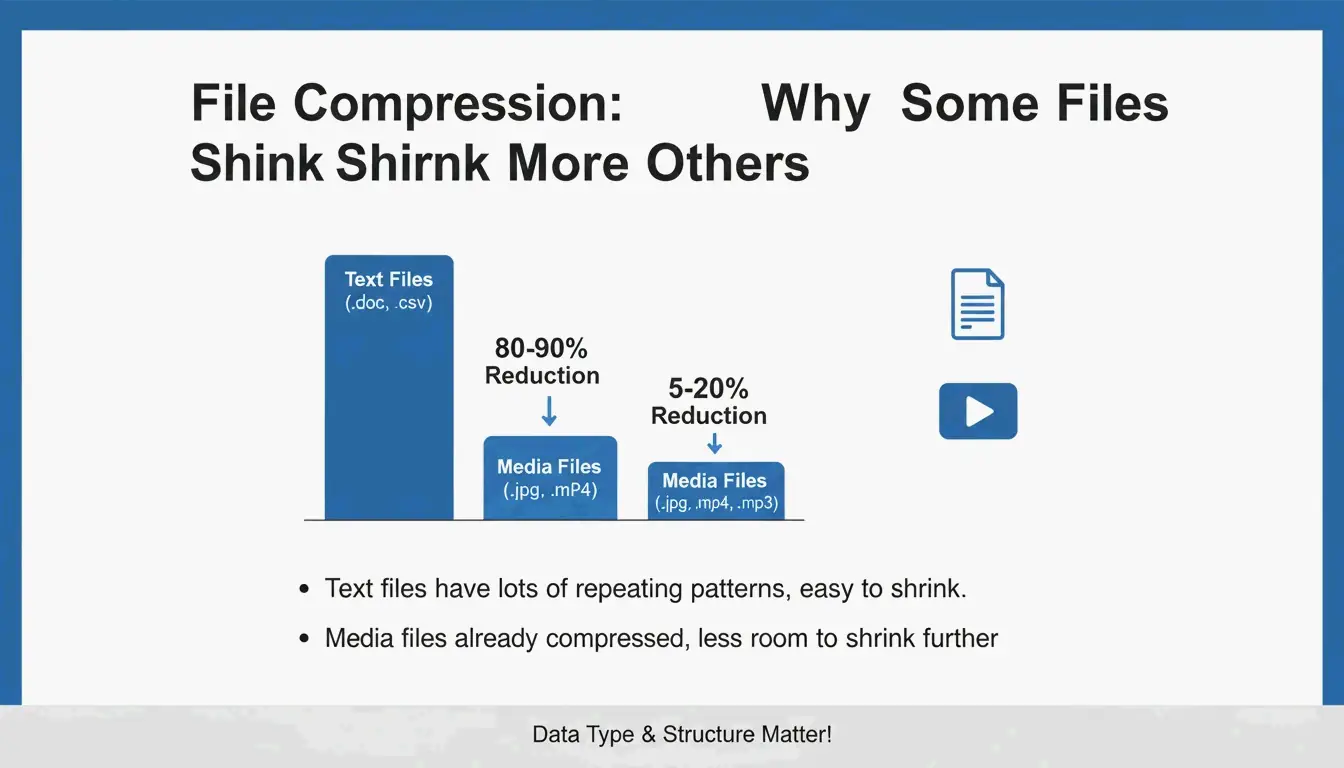
    Text (.txt, .html, .csv) 60–80% Highly repetitive data compresses well
    Documents (.docx, .xlsx) 30–50% Partially compressed already
    Images (.jpg, .png) Less than 5% Already compressed by their own codecs
    Video (.mp4, .mov) Less than 2% Already compressed
    RAW / uncompressed 40–70% Full data available for compression

    ZIP uses the Deflate algorithm — a lossless method. Your files remain identical after extraction.

    A simple comparison of compression ratios for different file types

    PowerShell Batch Compression

    
    Compress-Archive -Path "C:\Source\*" -DestinationPath "C:\Backup.zip" -CompressionLevel Optimal
    
    # Fast compression (larger file, quicker)
    Compress-Archive -Path "C:\Source\*" -DestinationPath "C:\Backup.zip" -CompressionLevel Fastest
    
    # Append files to existing archive
    Compress-Archive -Path "C:\NewFiles\*" -Update -DestinationPath "C:\Backup.zip"
    

    A technician saved 39.5 minutes by zipping 200 driver files into one package for a 30-second upload, per PalmGear.

    Archive Verification

    Always double-click your new ZIP to verify files open correctly before deleting originals. This “archive hygiene” step prevents data loss.

    How to Zip Files on Mac

    Using Finder (Built-in)

    1. Select files or folders in Finder
    2. Right-click (or Control-click) → “Compress [Name]”
    3. An Archive.zip file appears (or named after selection if single item)

    macOS uses Archive Utility — built directly into Finder, no extra apps needed.

    ZIP64 Support

    Modern macOS handles ZIP64 extensions, supporting archives beyond the old 4 GiB limit. ZIP64 technically allows up to 16 EiB per Wikipedia.

    Terminal Alternative: ditto

    For reliable large-archive creation:

    ditto -c -k --sequesterRsrc --keepParent src_directory archive.zip
    

    Naming Best Practices

    Avoid generic names like archive.zip. Use descriptive labels:

    PROJECT_ClientName_2026.zip
    Photos_Vacation_2026-05.zip
    Backup_Financial_Q1.zip
    

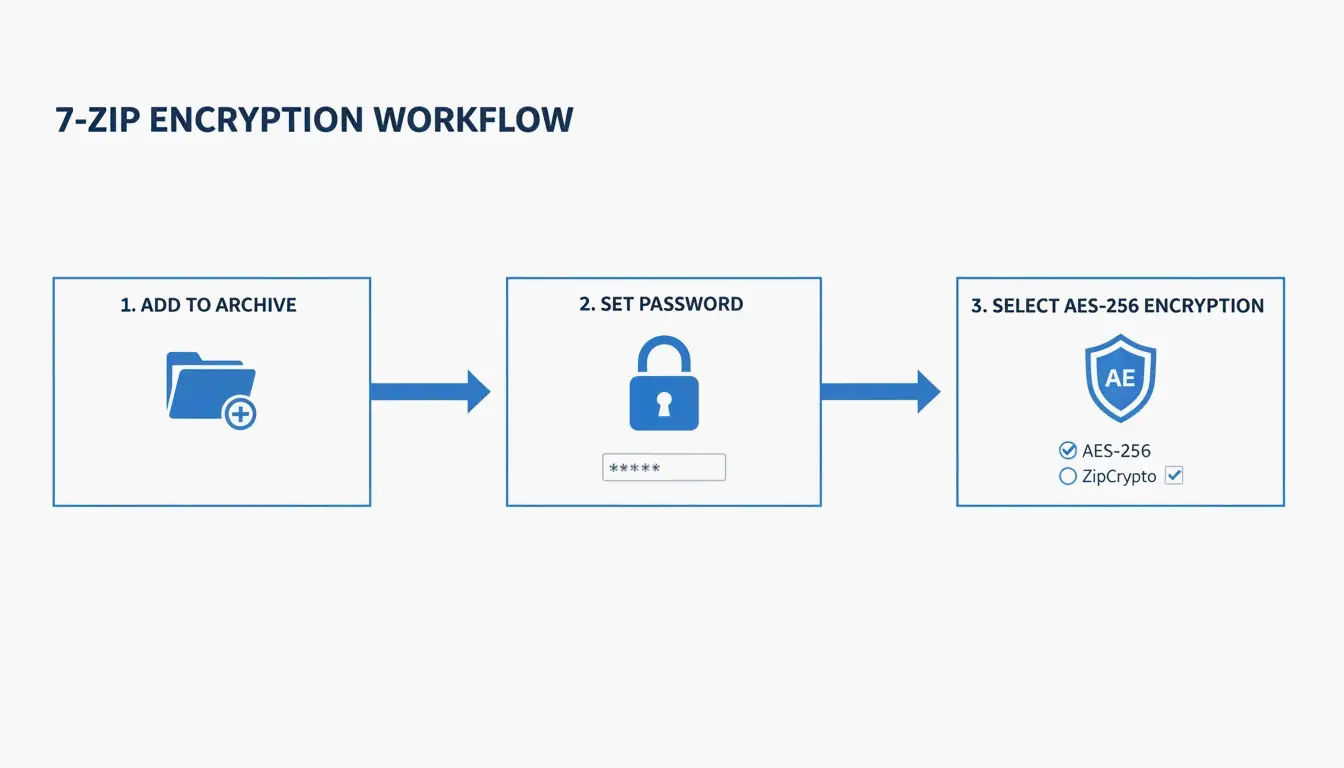
    Password Protection with 7-Zip (AES-256)

    Neither Windows nor Mac built-in tools support password-protected ZIP files. For encryption, use 7-Zip:

    1. Download and install 7-Zip
    2. Right-click files → 7-Zip > Add to archive
    3. In the Encryption section, enter a password
    4. Select AES-256 encryption
    5. Click OK

    A 3-step process for secure password protection

    ZIP Extractor explains: even if someone intercepts your file during a cloud transfer, AES-256 ensures they cannot access the data without the password.

    Format Comparison: ZIP vs. RAR vs. 7z

    Format Native Support (Win/Mac) Compression AES-256 Max Size Best For
    ZIP Both Good Requires 7-Zip 16 EiB (ZIP64) Universal sharing
    RAR Neither Better Built-in 16 EiB High compression, recovery records
    7z Neither Best (LZMA2) Built-in 16 EiB Maximum compression

    Unzipping: The Reverse Process

    OS Method
    Windows Right-click ZIP → “Extract All” → choose destination
    Mac Double-click the ZIP — Archive Utility extracts automatically

    Safari auto-unzip: If files unzip automatically when downloaded, disable at Safari → Settings → General → uncheck “Open safe files after downloading.”

    Conclusion

    Zipping files is a core 2026 data management skill. Use File Explorer (Windows) or Archive Utility (Mac) for everyday compression. For sensitive data, use 7-Zip with AES-256. For batch jobs, use PowerShell (Windows) or Terminal ditto (Mac). Always verify archives before deleting originals.

    FAQ

    Can I password-protect a ZIP without third-party software?

    No. Neither Windows File Explorer nor Mac Archive Utility supports password protection. Use 7-Zip (free) to apply AES-256 encryption.

    Why is my ZIP the same size as the original?

    This happens when the folder contains already-compressed files (JPG, MP4, PDF). The Deflate algorithm cannot further reduce these files — expect less than 5% savings.

    Does macOS automatically unzip downloads?

    Safari has “Open safe files after downloading” enabled by default. Disable it at Safari → Settings → General to prevent automatic unzipping.

    What is the difference between ZIP, RAR, and 7z?

    ZIP — Universal compatibility, built into Windows and Mac. RAR — Better compression, requires WinRAR. 7z — Best compression (LZMA2), requires 7-Zip. Both RAR and 7z support built-in AES-256 encryption.

  • How to Generate an ISBN Barcode: Bookland EAN Requirements (2026)

    How to Generate an ISBN Barcode: Bookland EAN Requirements (2026)

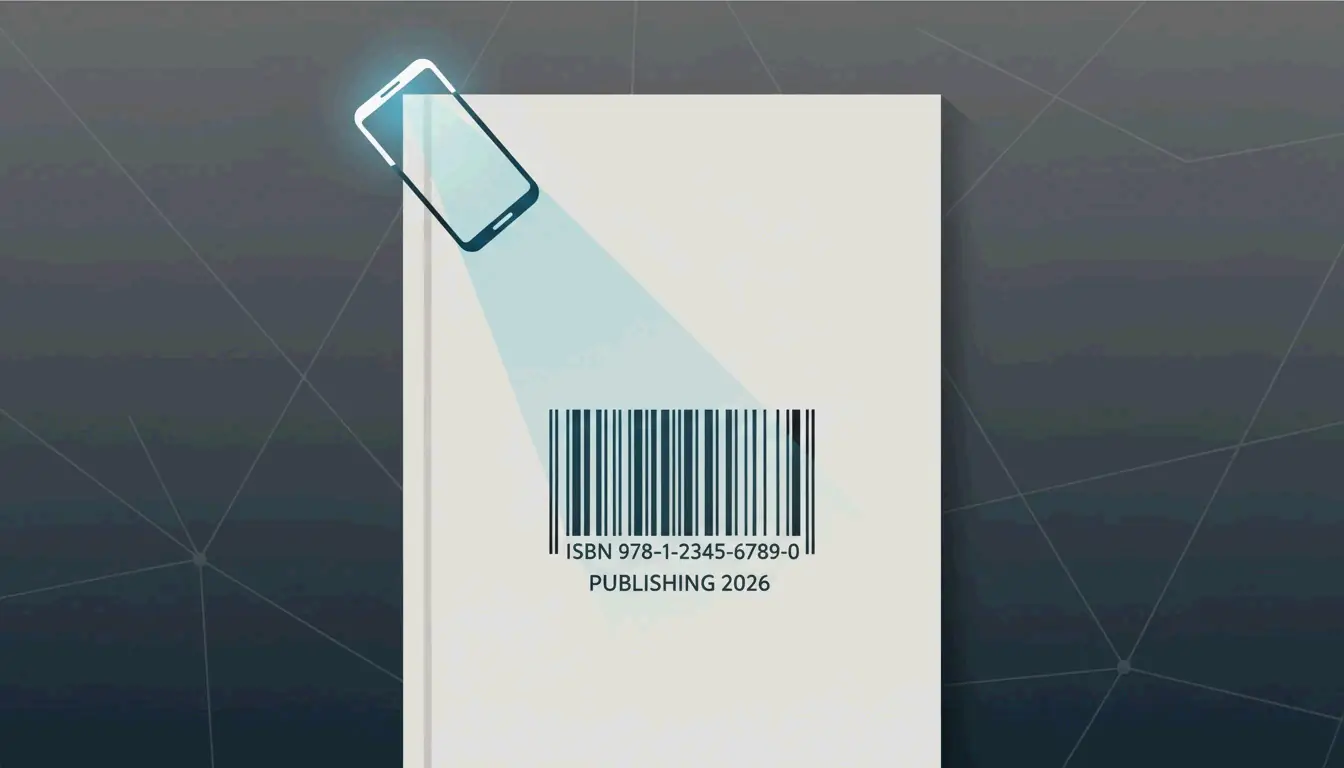
    To generate an ISBN barcode in 2026, purchase an official ISBN from Bowker, then encode your 13-digit number into the Bookland EAN-13 format using a free barcode generator. Place the scannable graphic on your back cover with proper quiet zones. This is required for selling through global retailers, libraries, and wholesalers.

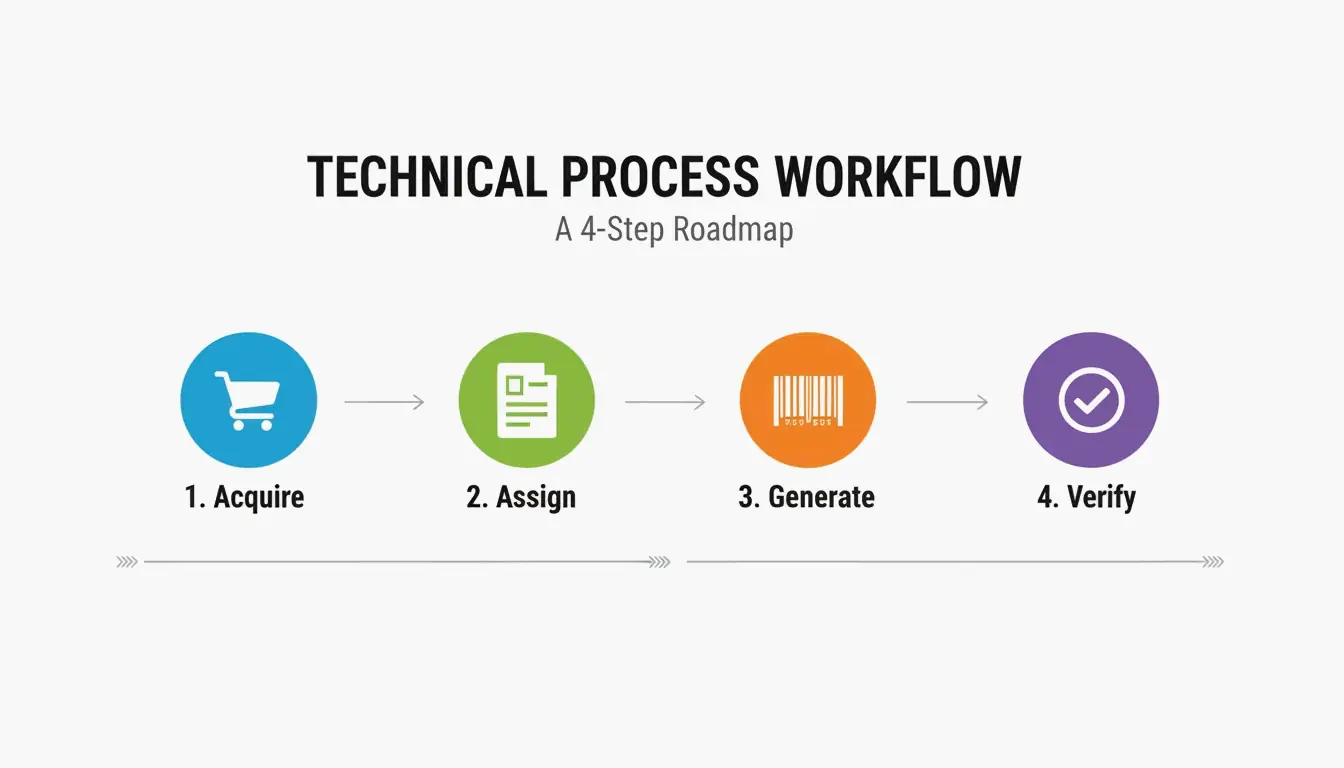
    The 4-Step ISBN Barcode Process

    Step Action Key Detail
    1. Acquire Buy ISBN from Bowker (MyIdentifiers.com) Only authorized U.S. source
    2. Assign Link ISBN to your book’s metadata Title, author, format (paperback/hardcover/ebook)
    3. Generate Create Bookland EAN-13 barcode graphic Free tools available — no need to pay Bowker $25
    4. Verify Test scan before printing Check readability and quiet zones

    Books.by reports that over 2.3 million ISBNs were issued in the U.S. in 2023 alone.

    Simple 4-step process: Acquire -> Assign -> Generate -> Verify.

    ISBN vs. Barcode: Understanding the Difference

    • ISBN — The unique 13-digit identifier (like a Social Security number for your book)
    • Barcode — The scannable graphic that represents that ISBN number

    Ash Davies, Founder of Books.by: “The ISBN is the number. The barcode is the scannable graphic. Most publishing platforms generate barcodes automatically and for free.”

    Free Barcode Generators

    Tool Cost Notes
    Author Media Free Reliable, no account needed
    Do Generator Free Specialized book barcode tool
    Bowker barcode service $25 Unnecessary — free tools work just as well

    Bookland EAN-13 Structure

    The Bookland EAN is a specialized EAN-13 barcode for books. It uses a 978 or 979 prefix that identifies the product as a book globally.

    Component Length Example Purpose
    GS1 Prefix 3 digits 978 or 979 Identifies “Bookland”
    Registration Group 1–5 digits 0 or 1 Country/language area
    Publisher Code Variable 237 Assigned by ISBN agency
    Publication Element Variable 45892 Specific title/edition
    Check Digit 1 digit 6 Catches scanning errors

    Check Digit Calculation (Modulo 10)

    1. Multiply each of the first 12 digits by alternating weights of 1 and 3
    2. Sum all products
    3. Take sum modulo 10 (remainder after dividing by 10)
    4. Subtract from 10 (if result is 10, check digit = 0)

    Wikipedia confirms this catches 100% of single-digit errors and most transposition errors.

    EAN-5 Price Extension

    Professional Bookland EANs often include a smaller EAN-5 supplemental barcode showing the retail price and currency.

    Price Currency Prefix EAN-5 Code
    $14.99 USD 5 51499
    $9.99 USD 5 50999
    £12.99 GBP 3 31299
    • USD prefix = 5, GBP = 3, CAD = 5, EUR = 3
    • Required by major U.S. retailers like Barnes & Noble
    • Optional for online-only sales (Amazon doesn’t require it)

    Back Cover Placement: Quiet Zone Requirements

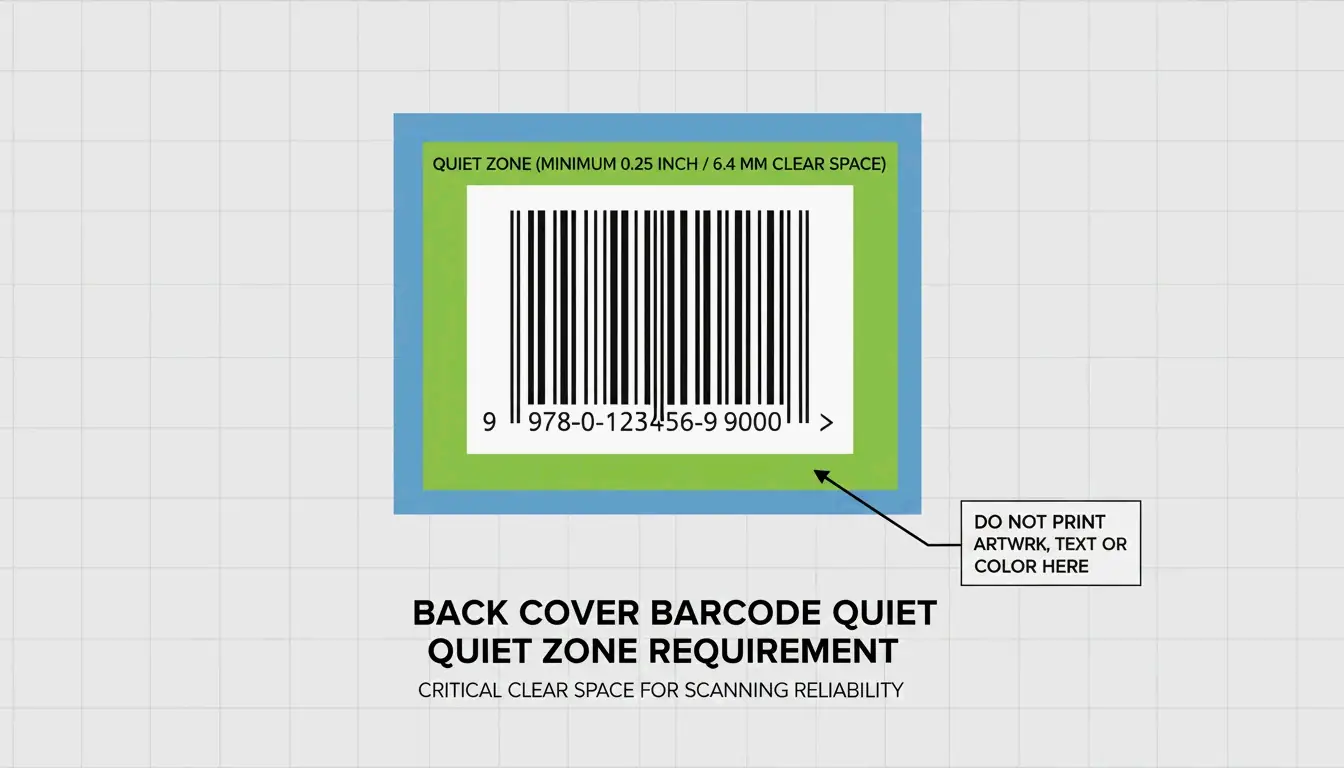
    Jason Pearce recommends placing the barcode in the bottom-right corner of the back cover with a white rectangle of at least 2 inches × 1.2 inches.

    Requirement Specification
    Location Bottom-right corner of back cover
    Minimum size 2″ × 1.2″ white rectangle
    Quiet zone Clear white margin on all sides of the barcode
    Resolution 300 DPI minimum for print

    Visualizing the 'Quiet Zone' and placement on the back cover.

    ISBN Costs: Why You Should Be the Publisher of Record

    Source Cost Publisher of Record
    Bowker (single) $125 You / your imprint
    Bowker (10-pack) $295 ($29.50 each) You / your imprint
    Amazon KDP (free) $0 “Independently Published”
    Other platforms (free) $0 The platform, not you

    SelfPublishing.com recommends buying your own ISBNs — many bookstores and libraries refuse to stock books with platform-assigned ISBNs.

    ISBN vs. ASIN

    Identifier Scope Use Case
    ISBN Global standard All retailers, libraries, distributors
    ASIN Amazon only Kindle ebooks sold exclusively on Amazon

    Physical bookstores and libraries require an ISBN — an ASIN is not sufficient.

    2027 Sunrise: Dual-Marking with GS1 Digital Link

    The industry is moving toward GS1 Sunrise 2027, transitioning from 1D barcodes to 2D codes. For 2026 book releases, use a dual-marking strategy:

    1. Traditional EAN-13 — Required for current checkout systems
    2. GS1 Digital Link QR code — Links to updated metadata, marketing materials, purchase links

    Automateed notes this moves beyond the limits of scan-only codes and prepares your book for modern inventory systems.

    Conclusion

    Generate your ISBN barcode by purchasing from Bowker, using a free Bookland EAN-13 generator, and placing it correctly on your back cover with quiet zones. Buy your own ISBNs to remain publisher of record. For 2026 releases, consider dual-marking with both EAN-13 and a GS1 Digital Link QR code to future-proof your book.

    FAQ

    Do I need a separate ISBN for ebook and paperback?

    Yes. International standards require a unique ISBN for every distinct format — hardcover, paperback, and epub each need their own number. This ensures accurate sales tracking across distributors.

    Can I use a free KDP ISBN for bookstores?

    Technically yes, but it lists “Independently Published” as the publisher. Many physical bookstores and libraries avoid stocking books with platform-assigned ISBNs. Buy your own ISBN to maintain professional credibility.

    What is the EAN-5 price extension?

    A small secondary barcode encoding the book’s retail price and currency (e.g., 51499 = $14.99 USD). Optional for online sales but required by major U.S. retail chains for physical shelf pricing.

  • Compress PNG: Shrink Images Fast Without Losing Quality (2026)

    Compress PNG: Shrink Images Fast Without Losing Quality (2026)

    To compress PNG files fast in 2026, use browser-native WebAssembly (Wasm) tools like iKit for private local processing. For maximum savings, apply lossy quantization (8-bit color palette, up to 85% reduction) or oxipng for lossless optimization that strips metadata and optimizes DEFLATE filters without changing a single pixel.

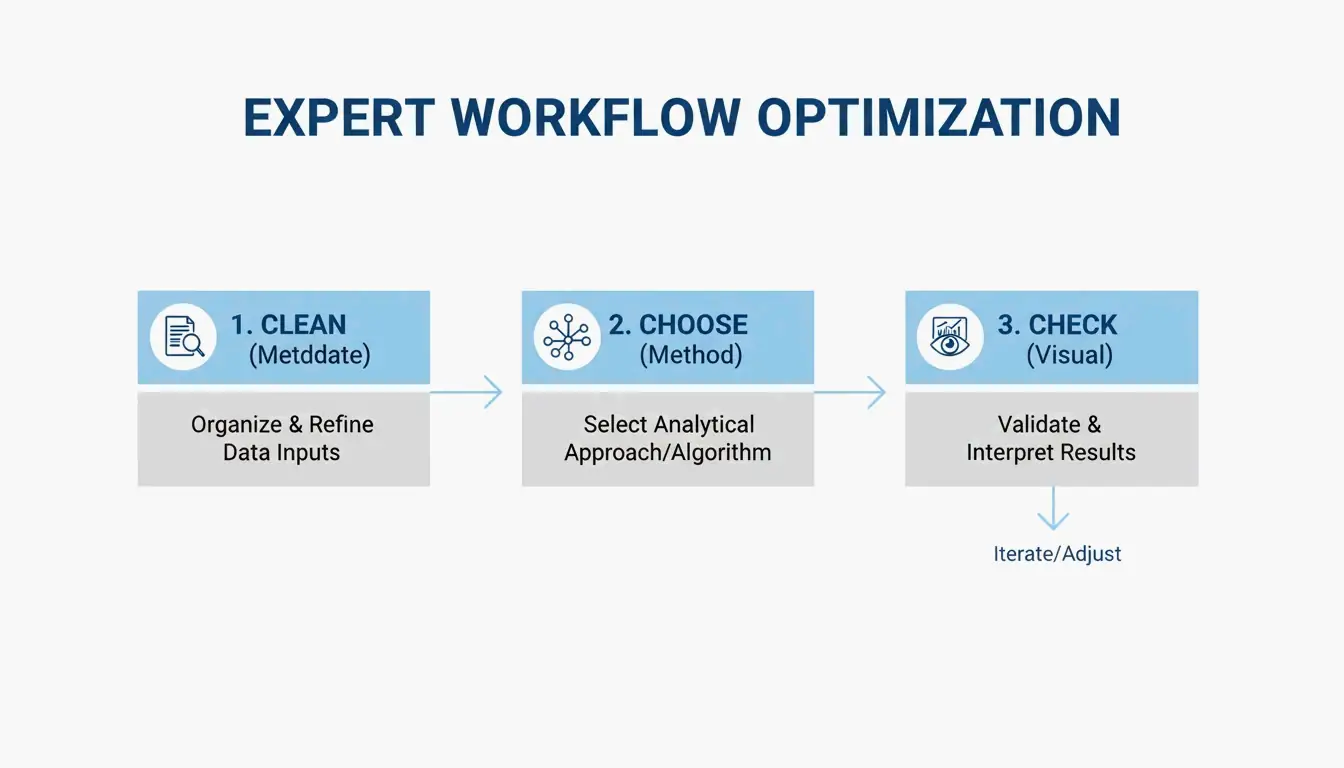
    The 3-Step Fast Compression Workflow

    1. Strip metadata — Delete hidden EXIF data and unnecessary color profiles (quick win: up to 200KB savings per file)
    2. Choose your method — Lossless (pixel-perfect) or lossy quantization (visually identical, much smaller)
    3. Visual check — Use side-by-side comparison before publishing

    3-step workflow: Clean, Choose, Check

    The ‘No-Upload’ Workflow: Wasm-Based Local Processing

    Modern tools like iKit and ToolTea use WebAssembly to process images entirely in your browser’s RAM. Your files never leave your device — faster processing and complete privacy.

    iKit notes that Photoshop metadata alone can add up to 200KB of bloat — data that does nothing for web viewers.

    Lossless vs. Lossy Quantization

    Method How It Works Typical Savings Quality Impact
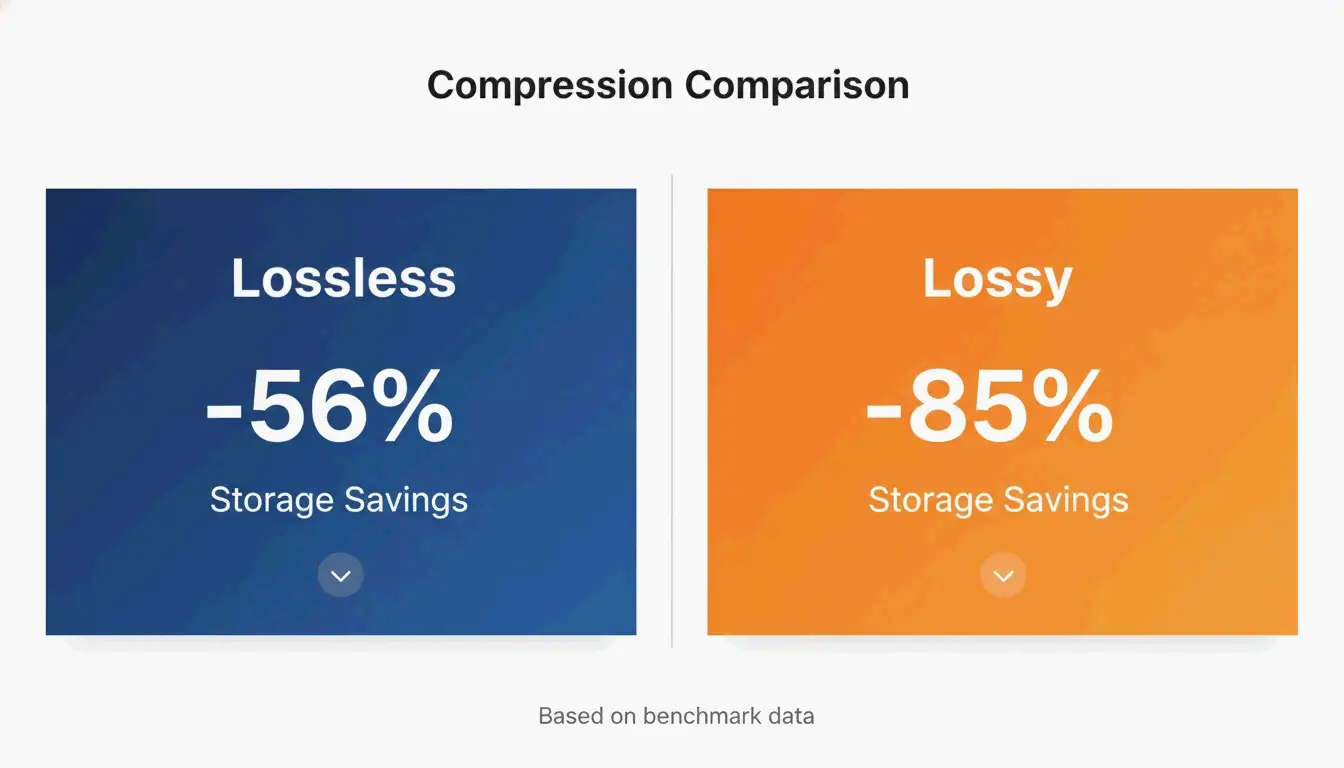
    Lossless (oxipng) Optimizes DEFLATE filters + strips metadata ~56% on UI screenshots Zero — every pixel unchanged
    Lossy Quantization (pngquant) Reduces 24/32-bit → 8-bit (256-color palette) ~85% on UI screenshots Visually identical to the naked eye

    iKit benchmarks confirm that lossy quantization achieves 85% reduction on UI screenshots with no visible difference, compared to 56% for lossless.

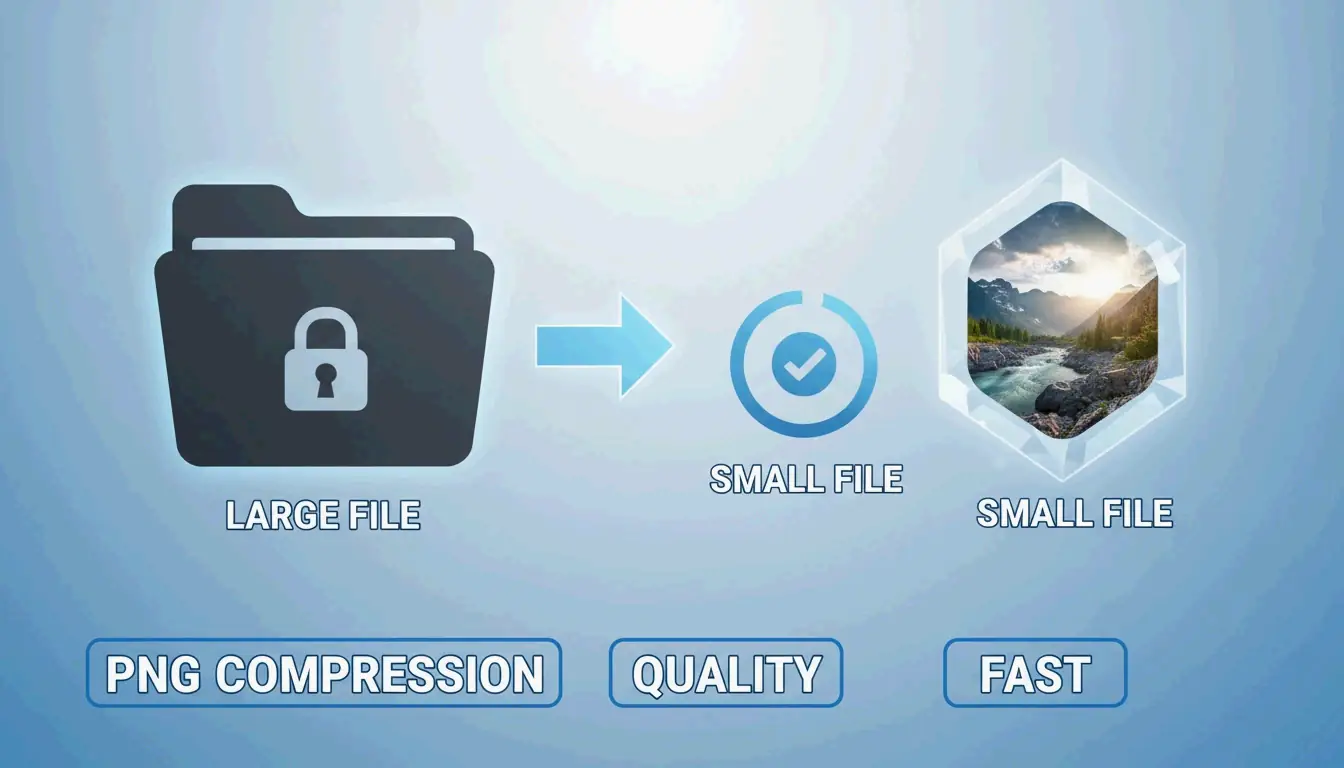
    Core comparison: Lossless (56% savings) vs Lossy (85% savings)

    Visual Artifact Guide

    Artifact Type Cause Where to Check
    Banding Aggressive color palette reduction Smooth gradients (blue skies, blurred backgrounds)
    Color bleeding Insufficient chroma subsampling Thin colored lines (use 4:4:4 to prevent)
    Edge softness Rare in PNG — mostly a JPEG issue Text and icon borders stay sharp in PNG

    Key advantage: Unlike JPEG compression, PNG quantization keeps text edges and icon borders perfectly crisp.

    When to Switch: PNG vs. WebP vs. AVIF

    Format vs. PNG Size Transparency Browser Support Best For
    PNG Baseline Yes Universal Logos, icons, pixel-perfect UI
    WebP 25–35% smaller Yes 97%+ General web images
    AVIF 50–70% smaller Yes 92%+ Maximum compression, photos

    SammaPix notes that WebP is 25–35% smaller than PNG at equivalent quality. AVIF beats WebP by another 20–30%. For pure web performance, consider converting.

    PNG 3.0 Update (June 2025)

    PNG is not standing still:

    Feature Impact
    HDR support High dynamic range for modern displays
    Official APNG Animated PNGs now a W3C Recommendation
    Improved Exif chunks Cleaner metadata handling

    CLI Batch Processing for Developers

    oxipng (v9.1.1) — Lossless Batch

    Built in Rust, significantly faster than older tools:

    
    oxipng -o max --strip safe *.png
    
    # Integrate into build pipeline
    find ./assets -name "*.png" -exec oxipng -o 4 --strip all {} \;
    

    pngquant (v3.0) — Lossy Batch

    Converts 32-bit PNGs to 8-bit palettes in bulk:

    # Batch compress to 256 colors
    pngquant --force --quality=65-80 --ext .png *.png
    
    # Target specific speed
    pngquant --speed 1 --quality=70-85 --output ./optimized/ *.png
    

    iKit recommends integrating these into your design system or CI pipeline so no unoptimized image reaches production.

    SEO Impact: Why PNG Compression Matters

    SammaPix reports that the LCP element is an image on 70% of all web pages. Heavy PNG files slow down LCP, hurting both user experience and search rankings.

    Action plan:
    1. Strip metadata for an instant win (up to 200KB per file)
    2. Use oxipng for logos and text graphics where every pixel matters
    3. Use pngquant for UI screenshots and illustrations (85% savings)
    4. For maximum web performance, convert to WebP or AVIF

    Conclusion

    PNG compression in 2026 means choosing the right algorithm: oxipng for lossless precision, pngquant for aggressive savings, and Wasm browser tools for private, fast processing. PNG 3.0 brings modern features, but WebP/AVIF remain superior for pure web performance. Integrate CLI tools into your build pipeline to ensure no unoptimized images reach production.

    FAQ

    Does compressing a PNG make it blurry?

    Lossless compression never causes blurriness — pixels are unchanged. Lossy quantization may cause “banding” in smooth gradients if the color palette is reduced too aggressively, but keeps text and icon edges perfectly sharp (unlike JPEG artifacts).

    How do I compress a PNG to exactly 20KB or 100KB?

    Use tools with a “target size” mode or quality slider. If lossless compression isn’t enough, resize pixel dimensions first (e.g., to 400×400px) then apply 8-bit quantization per Combine JPG.

    Is it safe to use online compressors for private images?

    Only if the tool uses local WebAssembly processing (e.g., iKit or ToolPix). These process in your browser’s RAM — files are never uploaded. Avoid any tool requiring a server upload for sensitive content.

  • Resize Image: Quick Photo Size Guide for Social Media, Web & Email (2026)

    Resize Image: Quick Photo Size Guide for Social Media, Web & Email (2026)

    To resize images correctly in 2026, upload to a tool like Adobe Express, set your target pixel dimensions (e.g., 1080×1350 for Instagram portraits), lock the aspect ratio to prevent distortion, and export as JPEG for photos or WebP for web. Resizing to exact display dimensions can cut file sizes by 80%+ per O’Brien Media.

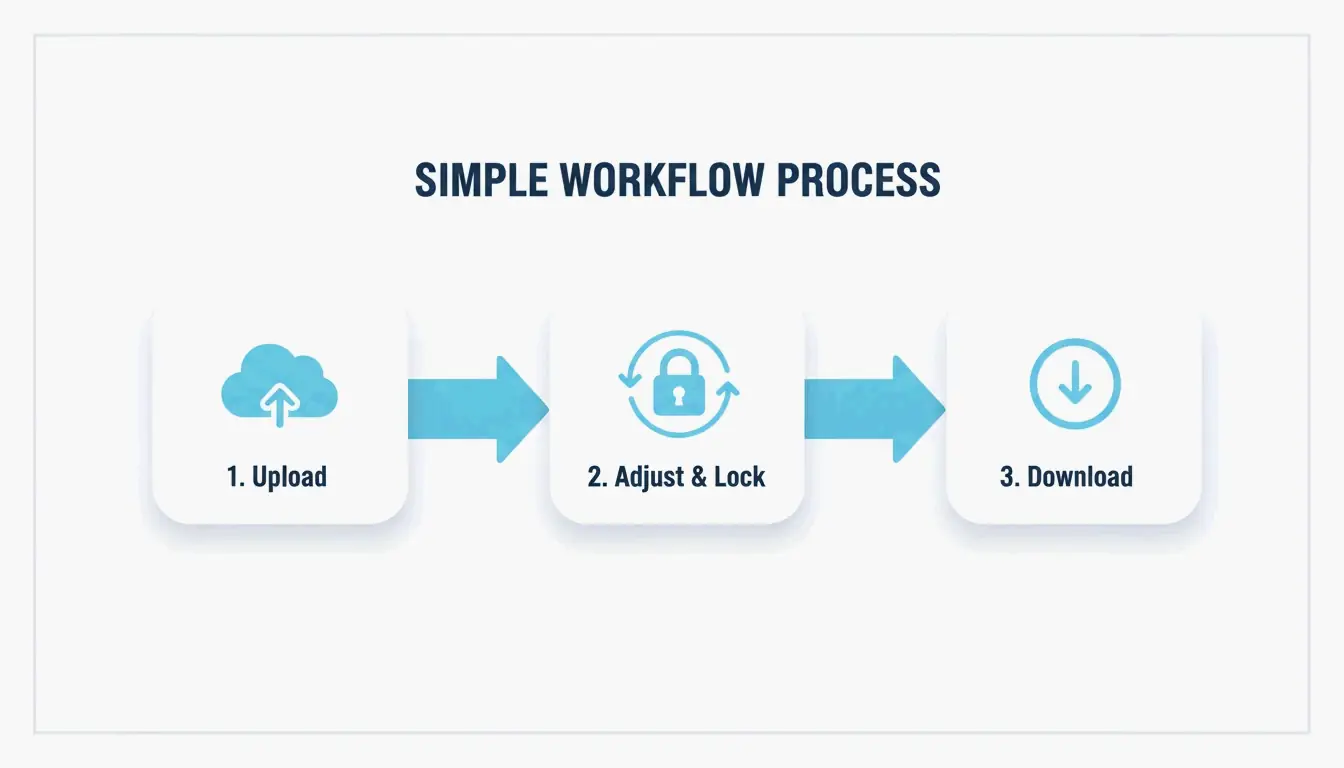
    3-Step Universal Resizing Workflow

    1. Upload — Drag your JPG, PNG, or WebP into a browser tool like Adobe Express
    2. Set dimensions and lock aspect ratio — Type your target width or height; the other adjusts automatically to prevent stretching
    3. Download — Save to a new file so your original stays intact

    3-step workflow: Upload -> Adjust (Lock Ratio) -> Download

    2026 Social Media Image Size Reference

    Instagram

    Format Dimensions Aspect Ratio Notes
    Portrait Feed 1080 × 1350 px 4:5 Best for engagement — takes up more screen space
    Square Feed 1080 × 1080 px 1:1 Classic grid format
    Landscape Feed 1080 × 608 px 16:9 Wider format
    Stories & Reels 1080 × 1920 px 9:16 Full-screen vertical
    Profile Photo 320 × 320 px 1:1 Displayed as circle

    Picssizer recommends the Portrait (4:5) format for feed posts — it occupies more vertical space, driving higher engagement.

    Safe Zones: Avoiding UI Overlap

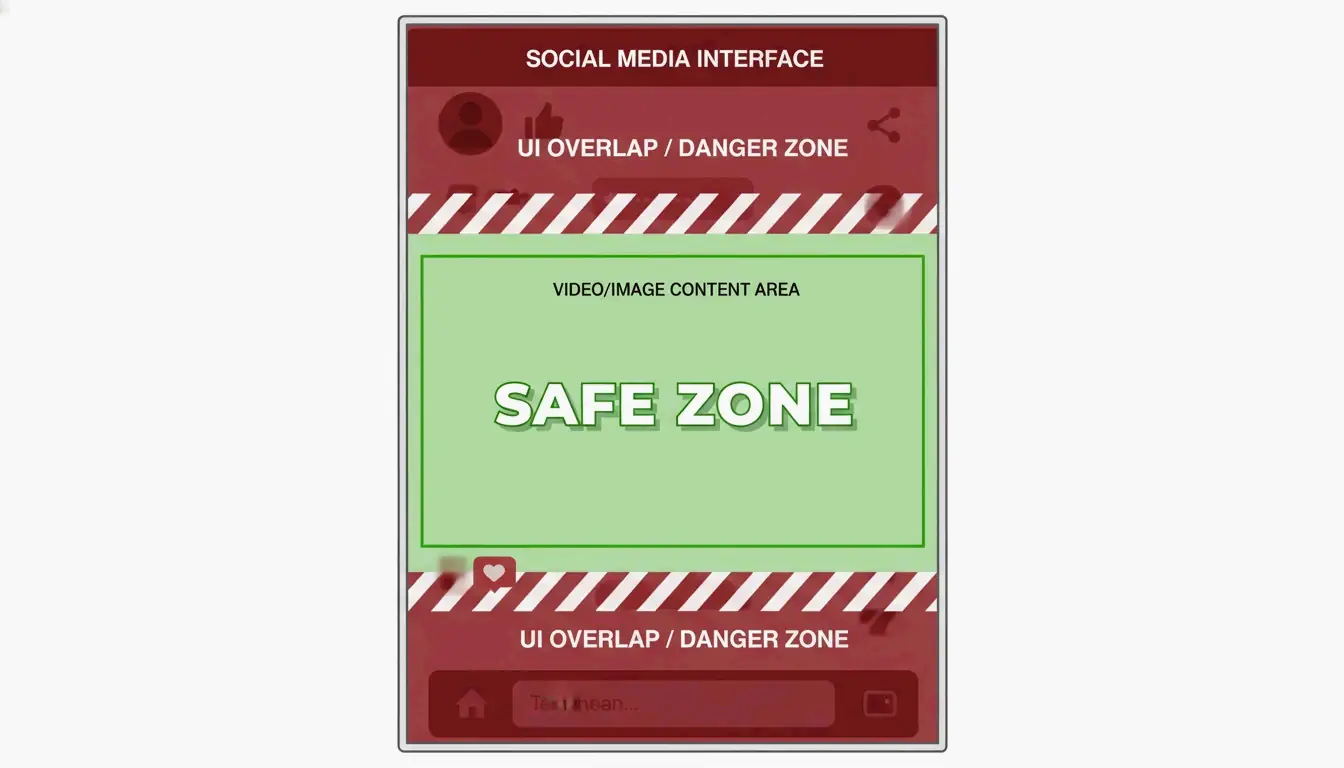
    For Stories and Reels (1080×1920), keep critical content in the center safe zone (approximately 1080×1420 px). Leave at least 250px clear at top and bottom to avoid UI elements (buttons, captions, profile info) covering your content.

    A visual representation of the 'Safe Zone' within a mobile screen frame

    Other Platforms

    Platform Recommended Size Format
    Facebook Cover 820 × 312 px JPEG
    Twitter/X Header 1500 × 500 px JPEG
    LinkedIn Post 1200 × 627 px PNG/JPEG
    YouTube Thumbnail 1280 × 720 px JPEG
    Email Header 600 × 200 px JPEG

    Format Selection: JPEG vs. PNG vs. WebP

    Format Best For Compression Transparency File Size
    JPEG Photography, social media Lossy No Small
    PNG Logos, text, screenshots Lossless Yes Large
    WebP Website images, SEO Lossy or lossless Yes 25–34% smaller than JPEG

    Recommendation: Use JPEG for social media posts (80–90% quality). Use PNG for logos and transparent graphics. Use WebP for websites to maximize SEO and page speed.

    Batch Resizing: Processing Multiple Photos at Once

    Doing one image at a time is a waste of time. In 2026, batch resizing handles entire galleries:

    Platform Tool Key Feature
    Windows Image Resizer Right-click batch resize in Explorer
    macOS Shortcuts app / Preview Built-in automation
    Android Photo & Picture Resizer 4MB → 400KB at 800×600

    Photo & Picture Resizer shrinks a 4MB photo to ~400KB at 800×600 resolution — ideal for email attachments.

    Resizing vs. Cropping: What’s the Difference?

    Action What It Does Quality Impact
    Resizing Changes total pixel count; entire image scaled Downsizing is lossless; upsizing may blur
    Cropping Removes outer edges; changes composition No quality change; some content discarded

    Always resize from the original high-resolution file — never from an already-resized or compressed version.

    Conclusion

    Effective image resizing means matching pixel dimensions to your target platform, locking aspect ratios, and choosing the right export format. Use the Instagram/social media size tables above, keep safe zones clear for Stories, and batch-process large galleries. For web, convert to WebP for maximum SEO benefit.

    FAQ

    What is the difference between resizing and cropping?

    Resizing changes the total pixel count of the entire image — everything stays, just at a different scale. Cropping removes the outer edges to change composition or aspect ratio — some original content is discarded.

    How can I resize without losing quality?

    Downsizing is generally lossless — you are reducing pixel count, which removes redundant data without degrading visible quality. Upsizing (enlarging) requires AI-assisted interpolation to avoid blurriness. Always downsize from the original file.

    Does resizing reduce file size?

    Yes. Reducing pixel dimensions directly removes data, lowering the MB count. Combining a resize with a WebP conversion delivers the most effective compression for web and mobile in 2026.

  • How to Decrease MB of PDF Files: 5 Fast Ways to Shrink Size Without Losing Quality

    How to Decrease MB of PDF Files: 5 Fast Ways to Shrink Size Without Losing Quality

    To decrease PDF file size without visible quality loss, downsample images to 150 DPI, strip metadata, and remove embedded fonts. The best tool depends on your needs: Adobe Acrobat Pro for professional control, Mac Preview for free native compression, Smallpdf for quick online jobs, Cisdem for batch processing, or OCR automation for developers.

    Why Is Your PDF So Large? The Pre-Compression Checklist

    According to Smallppt, high-resolution images often account for over 70% of a PDF’s total size.

    Size Contributor Typical Impact Fix
    High-res images 70%+ of file size Downsample to 150 DPI
    Embedded fonts Several MB Subset fonts instead of embedding full files
    Hidden layers / metadata Varies Strip via “Optimize PDF” tools
    Unoptimized scans Very large Run OCR, replace with text layer
    Version history Accumulates over edits Clean with “Discard Objects”

    A simple breakdown of PDF size contributors (Images vs. Fonts vs. Metadata)

    The 150 DPI Standard

    Use Case Recommended DPI Quality
    High-quality print 300 DPI Professional print output
    Email / web sharing 150 DPI Sweet spot — sharp on screens, small files
    Basic web reference 96 DPI Minimum for readability, maximum savings

    5 Methods to Reduce PDF Size

    Method 1: Adobe Acrobat Pro — Professional Control

    The gold standard for precise optimization:

    1. Open PDF → All Tools > Compress a PDF
    2. Choose Advanced Optimization (PDF Optimizer)
    3. Downsample images: Set color/grayscale to bicubic at 150 DPI for images above 225 DPI
    4. Discard Objects: Clear hidden layers, old bookmarks, unused form fields

    Batch performance tests show professional desktop software processes up to 100 pages per second depending on hardware.

    Method 2: Mac Preview — Free and Built-In

    No extra software needed on macOS:

    1. Open PDF in Preview
    2. Go to File → Export
    3. In the Quartz Filter dropdown, select “Reduce File Size”
    4. Click Save

    Warning: Cisdem notes the default filter can be too aggressive, making images blurry. For complex files, it can even increase file size.

    Ghostscript: The Power-User Alternative

    For better results on Mac, use Ghostscript via Terminal:

    
    gs -sDEVICE=pdfwrite -dPDFSETTINGS=/ebook \
      -dCompatibilityLevel=1.4 -dNOPAUSE -dQUIET \
      -dBATCH -sOutputFile=output.pdf input.pdf
    
    -dPDFSETTINGS Target Use Typical Reduction
    /screen Web/screen (72 DPI) ~95%
    /ebook Medium quality (150 DPI) ~90%
    /printer Print quality (300 DPI) ~50%

    Method 3: Online Tools — Smallpdf and pdfFiller

    Fastest for one-off jobs, no installation:

    1. Upload your document to Smallpdf or pdfFiller
    2. Pick compression level — Basic (balanced) or Strong (maximum shrink)
    3. Download the optimized file

    Privacy: Reputable platforms now follow GPC, GDPR, HIPAA, and SOC 2 Type II standards. Many offer “local-only” processing in your browser cache. For highly sensitive documents, stick to offline tools.

    Method 4: Batch Processing — Cisdem PDF Compressor

    For hundreds of contracts, invoices, or school resources:

    Cisdem PDF Compressor lets you drag-and-drop entire folders:

    1. Add files — Drag hundreds of PDFs at once
    2. Pick mode — Small, Medium, or Large
    3. Compress — All files processed in seconds

    Essential for real estate, healthcare, and legal industries migrating paperwork to cloud storage.

    Method 5: OCR and Developer Automation

    For programmatic compression at scale, use OCR to convert scanned images into searchable text layers, then replace heavy image backgrounds with lightweight previews.

    IronPDF (C#) example:

    // Compress images to 90% quality across all pages
    pdf.CompressImages(90, true);
    

    This scales image dimensions while stripping excess MBs — ideal for processing thousands of documents in enterprise pipelines.

    The concept of OCR: Image-based PDF to Text-based PDF

    Conclusion

    The most effective PDF compression targets 150 DPI for images and strips metadata and unused fonts. For quick jobs, use Mac Preview or Smallpdf. For professional control, use Adobe Acrobat Pro. For bulk operations, use Cisdem or Ghostscript. For enterprise automation, integrate OCR + programmatic compression.

    FAQ

    Why is my PDF still large after compression?

    Common causes: embedded fonts that can’t be subset, high-density vector graphics resistant to DPI downsampling, hidden layers, or accumulated version history. Use Adobe Acrobat’s “Audit Space Usage” to identify exactly what is consuming space.

    Is it safe to upload sensitive documents to online compressors?

    Only use tools compliant with GPC and GDPR. For legal or medical documents, use offline tools (Adobe Acrobat, Mac Preview, Ghostscript) to ensure data never leaves your machine.

    How do I reduce a PDF to a specific size (e.g., under 5MB)?

    Use Adobe Acrobat’s “Audit Space Usage” to identify the largest components, then manually adjust image compression to “JPEG High” and remove bookmarks, links, and unused metadata. Online tools like pdfFiller also show estimated output size before finalizing.